Key Takeaways
- Your college campus is not only where you take classes, but where you live. This makes it crucial to choose an environment that supports your mental health and gives you a sense of belonging.
- “Nice” looks different for everyone—some students prefer modern facilities and upscale dining, while others value traditions or access to off-campus activities.
- The U.S. offers incredible campus variety by region, from the southeast to the far west.
When you picture your college years, you’re probably not just thinking about classes. You’re probably envisioning late-night study sessions in your dorm, weekends spent with friends, walking across campus between classes, attending sporting events, and soaking in the space you’ll call home for the next four years. From the outdoor spaces to the dining halls and campus traditions, where you go to school has the ability to shape your overall college experience. If you’re exploring college options, take a look at some of the nicest college campuses in the U.S.
Why your college campus matters
College isn’t just where you study—it’s where you live. Think of your college campus as your own mini city that you’ll call home for the next four years. It’s where you’ll study in the library, grab meals, walk between classes, hang out with friends, and wind down after long days. And those things all support your mental health and motivation. Because of that, it’s important to choose a campus that matches your interests and makes you feel like you belong.

What makes a “nice” college campus?
While every student may have their own preferences when it comes to what they consider “nice,” many standout college campuses share a few qualities:
- Facilities: Campuses that offer updated classrooms, renovated dorms, and plenty of spaces for students to lounge and study outside of class often feel more inviting.
- Dining: Smaller campuses may only have one or two dining options, while larger campuses may have multiple dining halls, local chain restaurants, coffee shops, and markets.
- Aesthetics: Some students are drawn to historic buildings and green spaces, while others may prefer modern facilities and a more contemporary campus look.
- Atmosphere: From tailgating and Greek life to campus events, clubs, and student organizations, students are looking for an atmosphere where they can thrive.
- Surroundings: It’s not just about what’s on campus. Colleges that are close to cities or offer access to skiing, mountains, the beach, and other outdoor activities can be especially appealing to students.
Nicest college campuses by region
Below are some of the nicest college campuses in the U.S., organized by region:
New England (CT, ME, MA, NH, RI, VT)
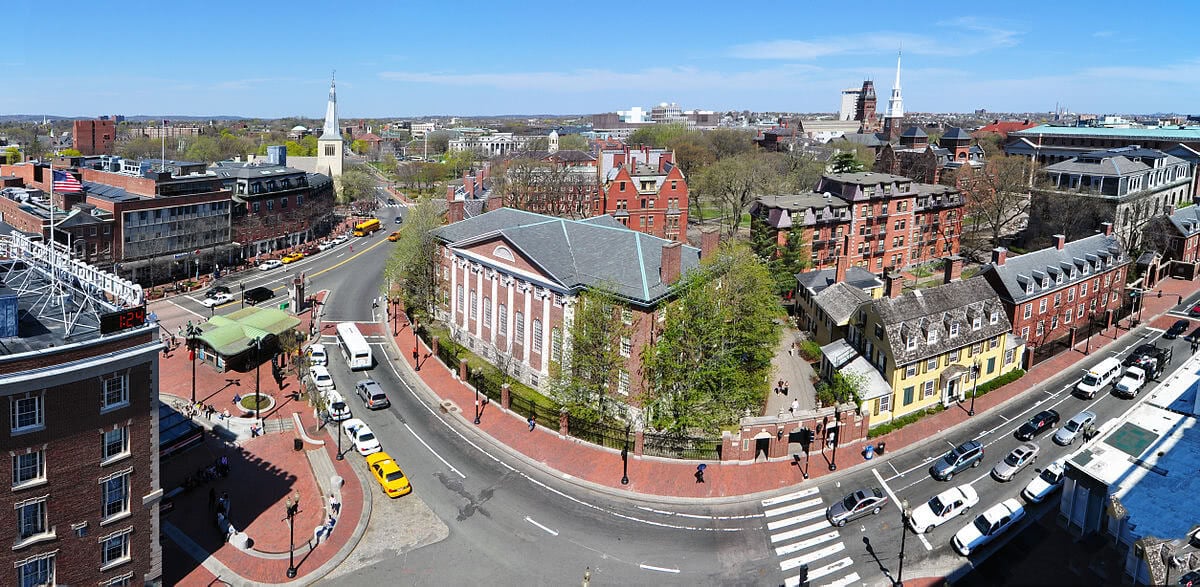
Chensiyuan via Wikimedia Commons
What makes this region special: This region is home to some of the most well-known Ivy League schools with classic architecture and historic charm. Students will experience all four seasons and have access to major cities like Boston, Providence, and New Haven.
| College | Location | Why we love it |
| Brown University | Providence, RI | ● A blend of historic and modern architecture
● Beautiful, quiet spaces to study and socialize ● College town located near a big city |
| Dartmouth College | Hanover, NH | ● Picturesque seasons
● Colonial buildings ● College-town feel |
| Harvard University | Cambridge, MA | ● Historic charm
● Walkable campus ● Unique traditions |
| Massachusetts Institute of Technology | Cambridge, MA | ● Riverside views
● Futuristic architecture ● Contemporary art throughout the campus ● Exceptional resources |
| Yale University | New Haven, CT | ● Neo-gothic architecture
● Friendly atmosphere ● Hogwarts-style setting ● Well-maintained green spaces |
Mid East (DE, DC, MD, NJ, NY, PA)
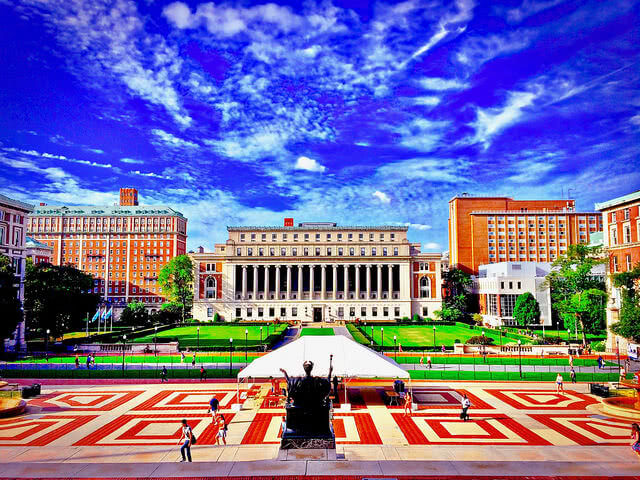
Flickr user Andreas Komodromos.
What makes this region special: If you dream of attending school in popular cities like New York, Philadelphia, or Washington D.C, there are plenty of college options to choose from.
| College | Location | Why we love it |
| Columbia University | New York, NY | ● Located in the heart of NYC
● Historic buildings ● Diverse student body |
| Georgetown University | Washington, D.C. | ● Located in the nation’s capital
● Cobblestone streets ● Riverfront views ● Steps away from shopping and dining |
| Princeton University | Princeton, NJ | ● Ivy-covered buildings
● Open green spaces ● Iconic buildings, including Nassau Hall and Fisher Fine Arts Library |
| St. Mary’s College of Maryland | St. Mary’s City, MD | ● A beautiful blend of classic and modern design
● Eco-friendly atmosphere ● Waterfront location with water activities |
| University of Pennsylvania | Philadelphia, PA | ● Arboretum campus with historic architecture
● Busy city life in Philadelphia |
Southeast (AL, AR, FL, GA, KY, LA, MS, NC, SC, TN, VA, WV)
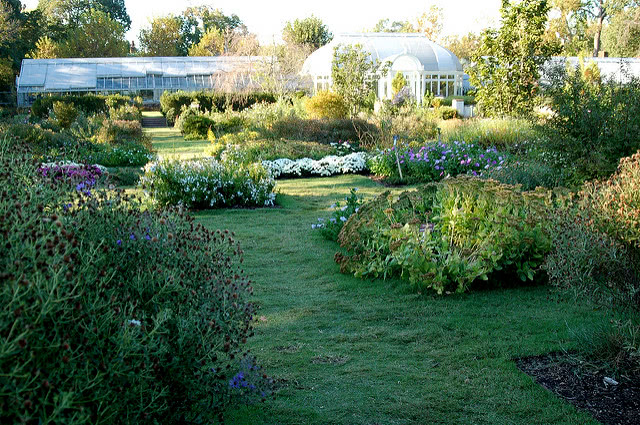
Flickr user mbtphoto
What makes this region special: From its warm climate to its coastal campuses, Southeastern schools are known for their strong school spirit and traditions.
| College | Location | Why we love it |
| College of Charleston | Charleston, SC | ● One of the oldest institutions in the south, historic buildings and oak-lined courtyards, featured in the film, The Notebook |
| Duke University | Durham, NC | ● Gothic architecture
● Deemed the “University in the Forest” ● Home to the iconic Duke Chapel ● Strong school spirit |
| University of Florida | Gainesville, FL | ● Diverse academic programs
● Spanish-moss magnolia trees ● College-town atmosphere |
| Vanderbilt University | Nashville, TN | ● Southern hospitality
● Park-like feel campus ● Outdoor sculptures ● Strong sports program |
| Washington and Lee University | Lexington, VA | ● Strong sense of community
● Uses the honor system ● Southern charm ● Located near the Blue Ridge Mountains |
| Wake Forest University | Winston-Salem, NC | ● Walkable campus
● Brick buildings ● Located next to historic Reynolda Village ● Scholar-focused community |
Great Lakes (IL, IN, MI, OH, WI)
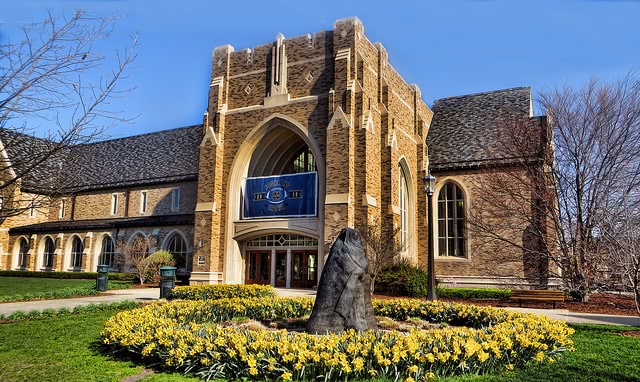
Flickr user Mariano Montel
What makes this region special: Students who attend college in the Great Lakes region benefit from campuses designed for student life, along with proximity to lakes, parks, and outdoor recreation.
| College | Location | Why we love it |
| Kenyon College | Gambier, OH | ● Strong liberal arts focus
● Known as “The Writer’s College” ● Picturesque rural setting ● Gothic architecture |
| Northwestern University | Evanston, IL | ● Waterfront campus
● Known for safety ● Close to beaches and parks ● Over 400 student organizations |
| University of Michigan | Ann Arbor, MI | ● Beautiful libraries, buildings, and botanical gardens
● Sustainability focus ● Located close to Ann Arbor for shopping, dining, and events |
| University of Notre Dame | Notre Dame, IN | ● Tight-knit atmosphere
● Extensive recreational facilities ● Known as one of America’s most beautiful campuses ● Strong sense of school pride |
| University of Wisconsin-Madison | Madison, WI | ● Lakeside campus built between two lakes
● Unique student traditions ● Strong academic reputation |
Plains (IA, KS, MN, MO, NE, ND, SD)

Bachrach41 via Wikimedia Commons
What makes this region special: If you are seeking wide-open spaces and campuses that feel community-focused, explore some of these well-known colleges in the Plains region of the U.S.
| College | Location | Why we love it |
| Kansas State University | Manhattan, KS | ● Ranked high for student happiness
● Close-knit community ● Extensive green spaces ● Feels like a small town |
| University of Iowa | Iowa City, IA | ● One-on-one mentorship opportunities
● Located close to downtown Iowa City ● Plenty of cultural spots, including arts, music, and food |
| University of Minnesota-Twin Cities
|
Minneapolis, MN | ● Traditional campus feel located in a big city
● Close to outdoor parks, lakes, and bike paths ● Offers diverse majors |
| University of Nebraska-Lincoln | Lincoln, NE | ● Offers specialized degrees
● Strong athletic program ● Welcoming atmosphere ● Nebraska’s oldest university |
| Washington University in St. Louis
|
Saint Louis, MO | ● Beautiful walkways and green spaces
● The campus features the gates from the 1904 Summer Olympics ● Located near the Gateway Arch and other outdoor amenities |
Far West (AK, CA, HI, NV, OR, WA)
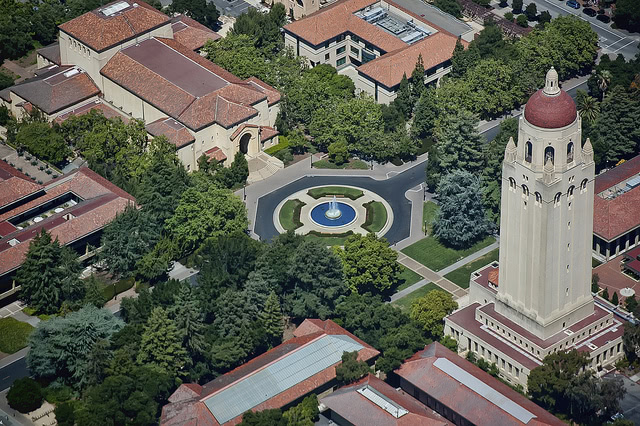
Flickr user Michael Estigoy
What makes this region special: This region offers colleges near coastlines, mountains, and major cities all along the West Coast.
| College | Location | Why we love it |
| Stanford University | Stanford, CA | ● Offers rigorous programs
● Home to a number of Olympic athletes ● Stunning Spanish-Romanesque architecture and outdoor spaces |
| University of Alaska Fairbanks | Fairbanks, AK | ● Arctic setting with views of the Northern Lights
● Snow-capped mountains and glaciers ● Outdoor recreation ● Offers hands-on research opportunities |
| University of California-Santa Barbara | Santa Barbara, CA | ● Sunny environment
● Located on the Pacific coastline ● Mediterranean-style buildings |
| University of Hawaii at Mānoa | Honolulu, HI | ● Experience city life, mountains, and beaches all together
● Recognized as an arboretum ● International student body ● Relaxed atmosphere |
| University of Washington | Seattle, WA | ● Famous for beautiful cherry blossoms lining the campus
● Located in the heart of Seattle ● Stunning mountain views ● A leading public research university |
Rocky Mountains (CO, ID, MT, UT, WY)
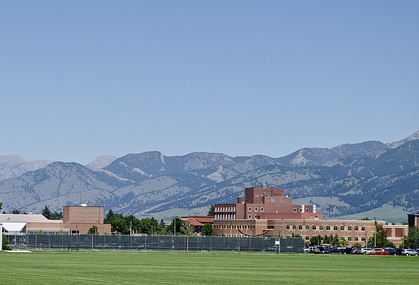
Flickr user: Tim Evanson
What makes this region special: This mountainous region tends to attract students who value outdoor adventure and academics.
| College | Location | Why we love it |
| Boise State University | Boise, ID | ● Located in the heart of Idaho’s capital city
● Welcoming community ● Modern facilities ● Plenty of outdoor recreation |
| Montana State University | Bozeman, MT | ● Surrounded by mountains
● Access to skiing, hiking, biking, and fishing |
| University of Colorado Boulder | Boulder, CO | ● Quick access to hiking, biking, and skiing
● Mountain views ● Inclusive community ● Diverse clubs |
| Utah State University | Logan, UT | ● Famous for its yearly winter snows
● Close to five national parks ● Surrounded by mountain views ● Strong sense of community |
| University of Wyoming | Laramie, WY | ● Small-town feel
● Access to skiing, climbing, biking, and hiking ● Over 200 areas of study ● Offers mental health resources |
Southwest (AZ, NM, OK, TX)

Flickr user Robert Hensley
What makes this region special: If you love desert scenery and sunshine, check out some of these campuses that offer year-round warmth, access to big cities, and plenty of outdoor activities.
| College | Location | Why we love it |
| Arizona State University | Tempe, AZ | ● Small-town feel located next to a big city
● Diverse student body ● Active campus life |
| University of Arizona | Tucson, AZ | ● Well-maintained green spaces and gardens
● Focus on sustainability ● A variety of clubs and organizations |
| University of Oklahoma | Norman, OK | ● Known as a top research institution
● Close-knit community ● Strong traditions ● Features historic Cherokee architecture |
| University of Texas at Austin | Austin, TX | ● A blend of historic and modern buildings
● Located near the eclectic city of Austin ● Outdoor activities |
| Western New Mexico University | Silver City, NM | ● Located near the Gila National Forest
● Surrounded by nature ● Strong liberal arts focus |
Finding what’s “nice” for you
While a campus may look beautiful on paper, that doesn’t mean it’s right for you. The best way to know if a college is your perfect match is to experience campuses yourself. When visiting, take these tips into consideration:
- Observe student life: Watch how students interact and use shared spaces. If the campus seems empty or disconnected, it could be a sign that the majority of students spend time off campus.
- Explore surrounding areas: Some colleges are in quieter, college towns, while others are in the hustle and bustle of big cities. You may not know which one you prefer until you experience it.
- Imagine yourself there: Sit in common areas, eat in the dining hall, or ask about spending the night in a dorm—anything that helps you picture your life there.
- Talk to students: One of the best ways to know if a campus is for you is to actually talk to students! Ask what they like and what they don’t to get an honest perspective.
Tips for getting involved on campus
Once school starts, getting involved can help you settle in and enjoy your day-to-day life more. Here are a few things that can really help the campus feel like home:
- Join clubs: Whatever your interests, there is a good chance there may be a college club or organization for you to join and meet like-minded peers.
- Attend campus events: Whether it’s a dorm late-night snack event, study session, or a cultural event, putting yourself out there can help you meet new people and feel more connected.
- Use campus resources: Take advantage of tutoring centers, campus libraries, and facilities like the gym or coffee shop.
- Get active: If it appeals to you, join an intramural sport or attend a workout class at the gym.
- Find a campus job: If you’re looking to make some extra money, campus jobs are a great way to earn income while building connections.
- Connect with professors: Stop by during office hours, ask questions, and build relationships for extra support.
Choose a campus that feels like home
Choosing a college where you’ll spend the next four years is one of the biggest decisions you’ll make. While academics matter, it’s just as important to consider the atmosphere and the place where you’ll actually be living day-to-day. Visit schools, talk to students, and experience the environment for yourself to find a school that truly feels right for you.
As you start to narrow your options, explore schools in regions that interest you. To take it a step further and personalize your search, use College Raptor’s FREE College Match tool to discover schools that make sense for you academically and financially.