
Key takeaways
- With lower in-state tuition, more access to financial aid, numerous student resources, and networking opportunities, public colleges provide high-quality education at a more affordable cost.
- Public colleges offer numerous academic programs, clubs, activities, and community service options to help students find their place on campus and get connected.
- Getting a degree from a reputable public university can lead to success in many different industries.
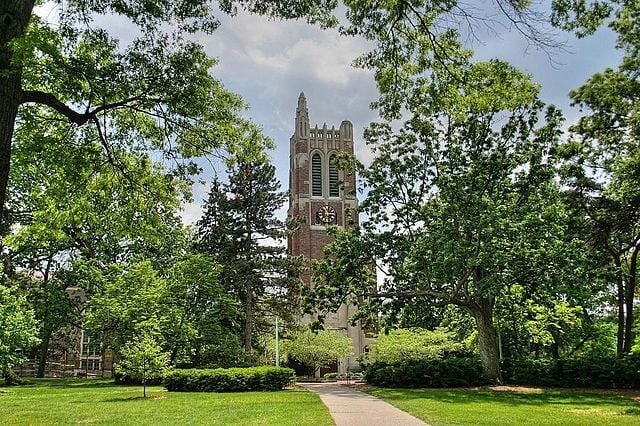
Michigan State University by Jeffness via Wikimedia Commons
Public colleges and universities offer great advantages that many students may not realize. While private colleges are often thought of as more rigorous or prestigious, state schools often provide strong academics and diverse opportunities. Public schools are not for everyone, but for some, they are an ideal fit. Here are 12 benefits to attending a public college or university:
1. More affordable tuition
Attending a public institution may be less expensive than attending a private institution. In 2025-2025 here’s the average pricing (including tuition, fees, housing, and food) of public vs private 4-year institutions:
- Public 4-year in-state: $25,850
- Public 4-year out-of-state: $45,789
- Private, not for profit 4-year college: $60,920
As you can see, public colleges and universities typically offer lower tuition rates for in-state residents. However, out-of-state students may qualify for lower tuition rates through tuition reciprocity. If you want to save money and get a valuable education, start by looking at public colleges in your state.

2. Greater access to financial aid
Because they’re funded by state governments, public universities provide some grants and scholarships that private institutions do not. Private colleges do offer financial aid packages, but public schools tend to have more options. This could mean more students qualify for some types of aid.
If you are attending in-state, you could also qualify for other state grants to make your education more affordable.
3. Diverse student populations
Diversity is good for students because it expands worldliness, enhances social development, and prepares students for future career success. Many public institutions offer diverse student populations in regards to race, gender, religion, and socioeconomic status. This allows students to learn from the different perspectives that their fellow classmates and professors bring to the table.
4. A large list of academic program offerings
Large public universities generally offer a wide variety of academic programs. This is great for students who are:
- Undecided on what they want to study
- Considering switching their major
- Interested in adding a minor or double-majoring
At a college with so many academic programs available, students are bound to find an area of study they are interested in and enjoy. Some colleges, like North Carolina State University, even offer first-year programs. These programs allow students to explore their options and discover their interests further before committing to a major.
5. Strong academic outcomes
Though a public school may be more affordable than a private institution, that doesn’t mean it’s lower quality. Graduation rates vary from college to college, but on average, 53.5% of students graduate with their bachelor’s degree. In fact, 50.8% of all college graduates earned their degree in 2025—around 2,167,569 students. That’s double what it was 20 years ago.
6. Reputation
Sometimes state schools get pegged as being safety schools or not as rigorous as other institutions. However, some of the highest-regarded colleges in the country are public institutions, such as the United States Naval Academy, University of California-Berkeley, University of California-Los Angeles, and the University of Virginia.
Many public colleges also have highly regarded programs within the universities, such as:
- University of Michigan at Ann Arbor’s business programs
- University of Texas at Austin’s engineering programs
- University of Florida’s agriculture programs
7. Wide variety of student activities
Many public universities offer a long list of student activities—sometimes even hundreds! You’ll find intramural sports, poetry groups, and even niche clubs like a Harry Potter-inspired Quidditch team. These organizations allow you to get involved, meet new people, and find your community. With so many options, it’s easy for students to find a place where they feel like they belong on a public school campus.
8. Active athletic programs
Do you enjoy watching sports? Or maybe you are looking to play at the collegiate level? Either way, public universities have some of the best college teams around. From exciting traditions and packed stadiums to tailgates and rivalry games, athletic programs at public universities help build school spirit and camaraderie among students. For athletes, playing a sport for a well-known program could help open doors to competing at a professional level after college.
9. Access to more student resources
Large public institutions generally have great resources to offer students to help them succeed in and out of the classroom. These may include:
- Free tutoring services
- Large fitness centers
- Recreational facilities
- Writing and math centers
- Career preparation services (resume workshops, mock interviews, internship programs)
- Counseling services
- Libraries with research databases and study spots
- State-of-the-art laboratories for research opportunities
Make sure to explore all the campus resources on your next college visit.
10. Amazing networking opportunities
A diverse student body allows you to meet other students and build professional connections. For instance, some student organizations may bring industry leaders to campus to speak to the community, and many professors invite colleagues to campus to speak to classes.
Students could have the opportunity to meet and network with many individuals during their time on campus. And keep in mind, networking is one of the most helpful things you can do to land your first job
11. Job opportunities
In their area, many public institutions have name recognition and are even nationally known. Companies may come to campus seeking future interns and employees for their companies. Students can meet these employers at career fairs, career centers, or even through introductions from their professors.
Graduates from public universities go on to find success in many different industries. In fact, about 85% of bachelor’s degree holders find a job within the first six months of graduation. While this may vary depending on location and industry, public university graduates are often recognized and respected by many employers.
12. A chance to serve the community
Many public universities like to give back to their local communities. Because of this, students may find numerous ways to get connected and make an impact. Whether it’s through a volunteer program or an on-campus club, students who are passionate about making a difference can find ways to get involved.
Why public universities are worth it
Public colleges offer many benefits! With affordable costs, strong academics, and good career outcomes, attending a public university may be a great option for you.
There are many reasons to consider this type of institution—and there are reasons to consider other types as well! To help you find a school that best fits your goals, use College Raptor’s FREE College Match tool and discover personalized matches today!







I love what you said about networking. It’s true that when you go to college you get to know and meet a lot of people. You have no idea where they will all end up. When I go to college again I’ll be sure to make as many friends as possible.
My daughter is a high school senior, and she doesn’t know which college she should go to. I like that you talked about how large universities have a lot of student organizations and activities for students to get involved in. My daughter loves service groups, so maybe she should narrow down her choice to a large college that might have organizations for her to join.