The term “Ivy League” dates back to the 1930s, when a sports writer coined the phrase. Today, the Ivy League conference consists of eight schools – Harvard University, Yale University, University of Pennsylvania, Princeton University, Columbia University, Brown University, Dartmouth College, and Cornell University. Take a trip back in time with us to see what exactly makes these schools elite and how the name came about.
Why Are the Ivy League Schools Called the “Ivy League?”
When talking about “Ivy League schools,” you likely think of elite colleges. And while that is true, the name actually originates from football!
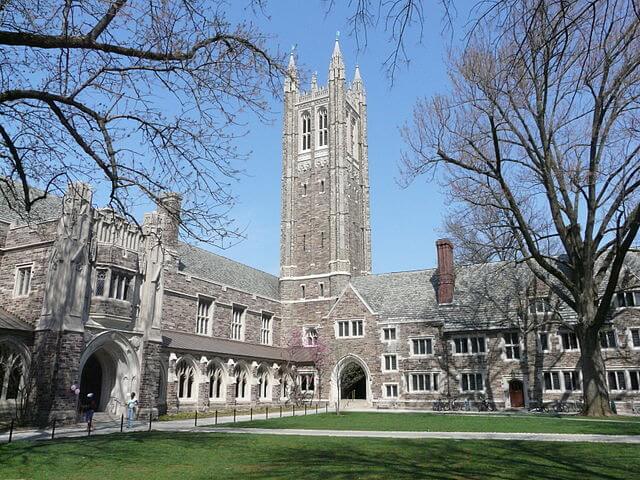
The “ivy” association with the schools was used by Stanley Woodward who wrote in the New York Herald Tribune in the 1930s. As the story goes, Woodward was annoyed that he had to cover Columbia University playing football against University of Pennsylvania rather than his alma mater (Fordham) and referred to Columbia and schools in the conference as those old “ivy-covered” universities to his editor.
So, Why Did Woodward Call Them “Ivy Colleges?”
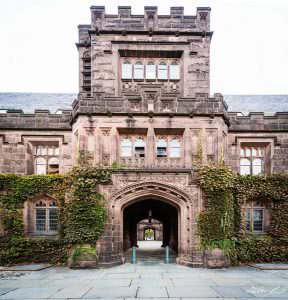
Flickr user Dieter Weinelt
The first time the phrase saw print was when Woodward wrote an October 1933 article and included the line, “The fates which govern play among the ivy colleges and the academic boiler-factories alike seem to be going around the circuit these bright autumn days cracking heads whenever they are raised above the crowd.”
This line was in reference to the football season of various schools, including Harvard, Princeton, Columbia, Yale, the United States Military Academy, and the United States Naval Academy, a group of colleges that already had long-standing football traditions.
In 1935, The Christian Science Monitor specifically used the term “Ivy League,” which then became synonymous with “older colleges.”
During 1936, the original Ivy League schools came together in an effort to maintain common interests when it came to sports.
But why are the Ivy League schools called the Ivy Leagues even today? Why did the name stick? In 1945, the colleges signed the Ivy Group Agreement, which set standards for the football teams. In later years, it would pertain to other sports. The League was officially founded in 1954, with the first year of competition in 1956.
Today, eight colleges of the Ivy League compete in the Ivy Group for Football, Baseball, Basketball, and Cross Country/Track.

What About the “IV League” Theory?
There is one myth that tends to be perpetuated when it comes to the Ivy League schools’ name: that it actually originated from the Roman numeral for four. This rumor is built on the idea that the conference originally had four members. Although this is an interesting theory, there is no real proof that this is where the name came from.
What Makes an Ivy League School Different From Others?
Each of the Ivy League colleges have outstanding sports programs, but today the phrase “Ivy League” is more synonymous with “elite school” than “football” for most students.
Each of the 8 schools in the conference are known for their competitive admission cycles, research programs, famous alumni, exemplary academic programs, historic and beautiful campuses, libraries, museums, and more.
What Schools Are in The Ivy League?
Today, there are eight Ivy League schools, all of which are regularly named to the top 50 schools in the country and have outstanding programs, resources, and opportunities for their students. Here’s a quick look at each of the colleges and universities, including their acceptance rate for the 2023 admissions cycle:
- Harvard University
- Location: Cambridge, MA
- Total enrollment: 30,631
- Admission rate: 3%
- Yale University
- Location: New Haven, CT
- Total enrollment: 14,776
- Admission rate: 5%
- University of Pennsylvania
- Location: Philadelphia, PA
- Total enrollment: 28,201
- Admission rate: 6%
- Princeton University
- Location: Princeton, NJ
- Total enrollment: 8,842
- Admission rate: 4.5%
- Columbia University
- Location: New York, NY
- Total enrollment: 34,782
- Admission rate: 4.3%
- Brown University
- Location: Providence, RI
- Total enrollment: 11,189
- Admission rate: 5.2%
- Dartmouth College
- Location: Hanover, NH
- Total enrollment: 6,744
- Admission rate: 6.3%
- Cornell University
- Location: Ithaca, NY
- Total enrollment: 25,898
- Admission rate: 8.5%
Every Ivy League school has a unique and rich history, and the entire reason they’re known as “Ivy League schools” today dates back to an almost throwaway line about their football programs! But the name stuck and it’s unlikely to go anywhere any time soon. Some other colleges and universities, known for outstanding programs and selective admissions, are even referred to today as “Hidden Ivies.”
Do you know what these elite schools look for in applicants? Each one is highly selective, so it’s essential that you have a game plan and know what to expect. Using our College Match tool, you can find out which universities or colleges best fit you!