
Key takeaways:
- Some colleges offer free tuition or full financial aid packages to families who make below certain incomes.
- Harvard, Caltech, and MIT waive tuition costs for students who make less than $200,000.
- Eligible students need to demonstrate financial need by completing the FAFSA and other requested aid applications.
 Did you know that some colleges and universities in the United States offer free tuition to accepted students whose families make below certain income thresholds? Many of these even offer fully covered cost of attendance (COA) to students with demonstrated financial need! We listed some of the top colleges with free tuition for the middle class, highlighted some other schools with similar grants, and detailed how you can learn more about your institution’s financial aid programs.
10 Top colleges with free tuition for middle class
Typically considered “expensive” colleges (if you’re going off the sticker price), many of the schools that were named to College Raptor’s Top Best Colleges for 2026 offer generous financial aid to their accepted students, including no-loan packages and fully covered costs.

1. PRINCETON UNIVERSITY
- Estimated COA: $94,624 for 2026-27
- Tuition: $68,140
Princeton University’s financial aid program covers the full cost of attendance for most families who make up to $150,000 a year. Most who make up to $250,000 pay no tuition. The school’s website states that 90% of students graduate debt free.
2. CALIFORNIA INSTITUTE OF TECHNOLOGY
- Estimated COA: $93,912 for 2025-26
- Tuition: $65,622
Need-blind, Caltech meets 100% of a student’s demonstrated financial need. Many whose families make less than $100,000 will receive a no-loan financial aid package, while those below $200,000 are often offered free tuition.
3. HARVARD UNIVERSITY
- Estimated COA: $86,926 for 2025-26
- Tuition: $59,320
Harvard University’s website says 24% of its students pay nothing to attend. Students with typical assets that make less than $100,000 pay nothing, and also receive a $2,000 start-up grant. If your family makes below $200,000, you’ll receive free tuition and potentially additional aid.
4. Yale University
- Estimated COA: $94,425 for 2025-26
- Tuition: $69,900
Yale University strives to make sure its students don’t have to take out loans. Families with a total gross income below $75,000 pay nothing towards the COA. Those who earn between $75,000 and $200,000 pay a percentage of the cost (between 1% and 20%).
5. MASSACHUSETTS INSTITUTE OF TECHNOLOGY
- Estimated COA: $89,340 for 2025-26
- Tuition: $64,310
MIT has a similar approach, with families who make less than $100,000 paying $0 to attend. Those with an income below $200,000 pay $0 towards tuition. The school states that the “median annual price paid by an undergraduate who received an MIT Scholarship was $10,268 for the 2024–2025 academic year.
6. STANFORD UNIVERSITY
- Estimated COA: $100,969 for 2024-25
- Tuition: $67,731
Most students who have a gross family income below $200,000 receive scholarship aid from Stanford and pay a fraction of the COA. For example, students who make less than $75,000 were expected to pay an average of $4,414 out of pocket towards the total net cost.
7. UNIVERSITY OF CHICAGO
- Estimated COA: $98,301 for 2025-26
- Tuition: $71,325
University of Chicago also offers free tuition, but only to first generation students who earn less than $125,000 per year. For families who earn less than $60,000 a year, they’ll also be given funds to cover room and board.
8. UNIVERSITY OF PENNSYLVANIA
- Estimated COA: $95,612 for 2025-26
- Tuition: $63,204
The University of Pennsylvania, or Penn, introduced The Quaker Commitment for the 2025-26 academic year which meets 100% of a student’s demonstrated need without loans. Families with income below $75,000 receive a package that covers tuition, fees, room, and board. Those who make less than $200,000 will receive covered tuition at minimum.
8. DUKE UNIVERSITY
- Estimated COA: $94,157
- Tuition: $70,265
Duke University’s full tuition grants based on financial need are only for students who are residents of North Carolina and South Carolina. If you make below $65,000, you’ll receive a full financial aid package that doesn’t include loans. For families who make less than $150,000, they’ll receive a full tuition grant.
9. DARTMOUTH COLLEGE
- Estimated COA: $95,490
- Tuition: $69,207
Dartmouth College offers no loans (and zero parent contribution) to families who have an annual income below $125,000, up from $65,000 in 2023. Those who earn less than $175,000 can expect to pay nothing towards tuition.
10, And other colleges offering free tuition
Many other schools offer free tuition or fully covered costs to students whose families meet income thresholds, such as:
- Berea College
- Columbia University
- Emory University
- Mount Holyoke College
- Northern Arizona University
- Northwestern University
- Rice University
- Texas A&M University
- Tufts University
- University of California System
- University of Illinois at Urbana-Champaign
- University of Massachusetts-Amherst
- University of Michigan
- University of North Carolina at Chapel Hill
- University of Virginia
- Washington University in St. Louis
Check your college’s financial aid department to learn more about potential free tuition or full scholarships based on demonstrated need. Several states also now offer covered tuition for their residents at public colleges.
How can you qualify for free college tuition?
For most free tuition programs, you will need to complete the Free Application for Federal Student Aid (FAFSA). Some colleges may request the CSS Profile instead or with the FAFSA. Others, such as Princeton University, have additional separate financial applications. And states with free college programs may require a state financial aid application.
You can learn more about your school’s policies and processes by heading to their financial aid department website or contacting them. Keep in mind: Many schools have generous financial aid packages that can cover much or even all of your COA, even if they’re not specifically offering a “free tuition” program.
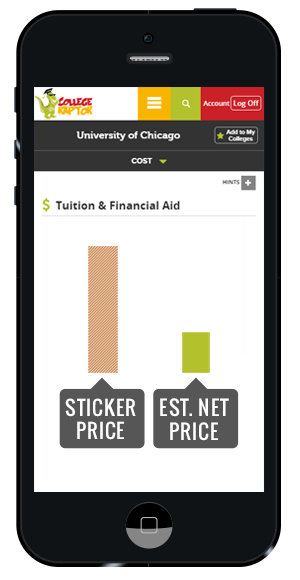
Did you know you can get estimates on how much you’re likely to pay at each school before you even apply? Our College Match tool helps you find your estimated net price based on your family’s financial situation. Learn more here.





I have twin boys who are Juniors and will be graduating 2017 and trying to figure out how I am going to pay for their tuition times 2. We are a middle class family and looking to see if we can get assistance or free tuition. Need to start looking now if you can help us. Thank you
It will actually be cheaper (per child) if you have 2 kids in college at the same time instead of them having any gap time in between. Why? Because your EFC (Expected family contribution) is the same no matter how many kids are in college. Say your EFC is $30,000. If you have 2 kids in college then it is $30,000 ÷ 2 or $15,000 per student per year. So in 4 years you would pay $120,000. If your kids were 4 years apart then you would be paying $30 times 8 years = $240,000.
Had I realized that earlier I would’ve had my kids 1 year apart instead of 5.
We have two sets of twins 13 months apart so we will have 4 in at once over 5 years. Do you have any tips now that your twins are in college? Thanks…
Does this apply to Humboldt State University?
Hello,
I’m a 23-year old high school graduate working 5-6 days a week in order to make ends meet while attending a local community college part-time to get my degree (slowly, but surely).
Thank you so much for posting this list. Just to clarify, given that the applicant meets the low-income criteria, do all of these schools provide full-rides even if you apply as a transfer applicant? Is there an age criteria to qualify for full financial aid? What about test scores? Are they the same for both freshmen and transfer applicants? Would I rather apply as a freshman?
Your input will be highly appreciated. Thank you in advance!
Happy New Year!
Hello! Each school will likely have a different policy based on all the great questions you specified. As such, it would be important to get into contact with the schools you’re interested in to get more relevant, specific information regarding your personal circumstances. (Though your best chances are likely as a freshman non-transfer applicant). Good luck!
Does this apply to students pursuing a Master’s degree?
I am only 14 and Princeton has been my dream collage since 5th grade. After finding out I could get help on payment I was so relieved, because we are not a high or middle class so we don’t have all the money in the world to spare. Now all I have to do is get good grades so I can get accepted.
Same but I’m 13 and my dream college has been Harvard since I was 5
Financial aid for my daughter in 2019 after she completes 12th in psychology undergrad in Ivy League University
Thank you so much for posting this . I am permanently disabled plus we have a severely disabled child . Our oldest daughter will graduate 2019 and I am terrified on how we can afford college. Our total in come for the family is 70k. Do schools take in consideration if one parent is disabled?
Thank you and God Bless.
I am looking to use your college search feature already having an associates degree. Aiming for my Bachelor’s, the program assumed I don’t already have one and It makes it impossible to get real results. (Results that don’t assume I’m heading out of high school)