Key takeaways
- A military college is a school where you earn a standard degree while also training to become a leader in the armed forces.
- These schools provide a structured lifestyle that includes military uniforms, daily drills, and strict rules for all students.
- Students at these colleges are often called cadets or midshipmen, and they focus on character, discipline, and physical fitness.
- Depending on the school you choose, you may graduate as a commissioned officer with a guaranteed job waiting for you in the military.
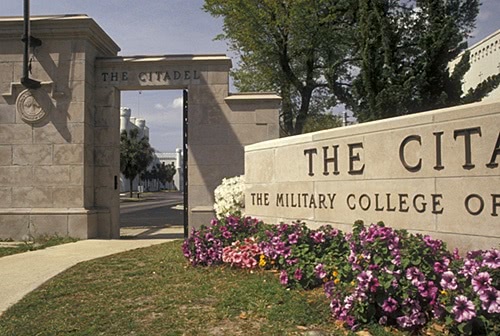
Flickr user Mark Goebel
If you want to serve your country and earn a degree at the same time, a military college could be a great choice for you. These schools combine high-level academic performance with leadership training to prepare you for life as an officer in the U.S. Armed Forces. Here’s what you need to know about pursuing an education at a military school.
What is a military college?
A military college is an accredited school that trains students to become military officers. They can be for students in JROTC or ROTC (Reserve Officers’ Training Corps) or for students who are aiming to become an officer in their branch.
Unlike a traditional campus, these schools focus on discipline, character, and leadership through military training. Students, often called cadets or midshipmen, live in a military environment while earning their bachelor’s degree. You will follow a strict daily routine that includes drills, physical training, and rigorous coursework.

Types of military colleges
1. Federal service academies
These are the most well-known military colleges. They are fully funded by the federal government, meaning tuition, room, and board are covered. In exchange, students are considered to be on active duty and must serve as officers in the military after graduation.
- U.S. Military Academy (West Point): West Point, NY
- U.S. Naval Academy: Annapolis, MD
- U.S. Air Force Academy: Colorado Springs, CO
- U.S. Coast Guard Academy: New London, CT
- U.S. Merchant Marine Academy: Kings Point, NY
2. Senior military colleges (SMCs)
Senior military colleges offer the best of both worlds. They are traditional universities that also host a dedicated Corps of Cadets. Unlike service academies, not every student at an SMC is required to join the military after graduation, though many choose to.
- Norwich University: Northfield, VT
- Citadel Military College of South Carolina: Charleston, SC
- Texas A&M University: College Station, TX
- University of North Georgia: Dahlonega, GA
- Virginia Military Institute (VMI): Lexington, VA
- Virginia Tech: Blacksburg, VA
3. Maritime colleges
Maritime colleges are specialized schools that prepare students to work as officers in the U.S. Merchant Marine, the military, or the global shipping industry. Like senior military colleges, they offer a mix of military structure and traditional college life.
- SUNY Maritime College: Throggs Neck, NY
- California State University Maritime Academy: Vallejo, CA
- Maine Maritime Academy: Castine, ME
- Massachusetts Maritime Academy: Buzzards Bay, MA
- Texas A&M Maritime Academy: Galveston, TX
- Great Lakes Maritime Academy: Traverse City, MI
4. Military junior colleges (MJCs)
These are two-year colleges that allow students to become commissioned officers in the Army Reserve or National Guard in just two years through the Early Commissioning Program (ECP).
- Georgia Military College: Milledgeville, GA
- Marion Military Institute: Marion, AL
- New Mexico Military Institute: Roswell, NM
- Valley Forge Military Academy and College: Wayne, PA
How to get into a military college
Getting an acceptance letter from a military school, especially a service academy, requires more than just good grades. You must prove you are a leader and a scholar.
- Secure a nomination: For most academies, you must apply for a formal nomination from your U.S. Senator or Representative. Start this process in your junior year!
- Pass the fitness test: You must pass the Candidate Fitness Assessment (CFA), which includes running, push-ups, and pull-ups.
- Medical clearance: You must also pass a rigorous medical exam to prove you are fit for service.
- Academic excellence: Schools look for a high unweighted GPA and strong SAT or ACT scores.
- Leadership record: Admissions teams want to see leadership skills, such as having been a team captain, club president, or Eagle Scout.
- The interview: Be prepared for an intense interview with a school representative or a nomination committee.
Should you attend a military college?
Attending a military college is a major decision. If you are considering this path, keep these four factors in mind:
- Service commitment: Most service academies require you to serve in the armed forces for at least five years after graduation.
- High standards: You must maintain excellent grades and meet strict physical fitness requirements to remain enrolled.
- Strict competition: Admission is highly selective. You will likely need top test scores, leadership experience, and medical or fitness assessments.
- Nominations: Most academies require a nomination from a member of Congress or a specific military branch before you can apply.
Finding success through discipline and education
Attending a military college is a path to success for those who prefer structure and want to lead. While the application process is tough, the reward is a debt-free education and a career.
Ready to see if your stats make you a match for a top military program? Use College Raptor’s College Match tool to compare schools and find your best fit today!