Key takeaways
- Students going back to graduate school after a long break from undergrad may feel overwhelmed and underprepared when re-entering the classroom.
- However, older graduates have work and life experience that can give them an edge over other students.
- To prepare for grad school, research programs that match your goals and schedule requirements and brush up on your study skills.
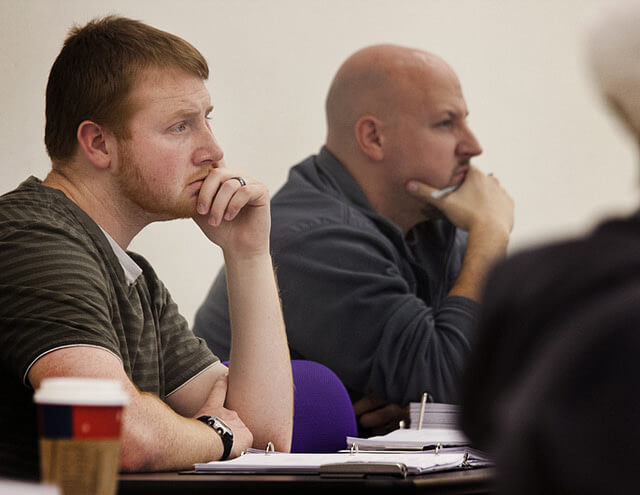
Source: Flickr user newmanuniversity.
Some students go straight to grad school after earning their bachelor’s, while others enter the workforce. The latter may want to pursue their graduate degree years later but be intimidated by the long gap in education and re-entering the classroom. If you’re in this boat and want to start grad school after a long break from undergrad, these tips will help you balance your responsibilities, get you prepared for study again, and find the right universities for your goals.
Should you take a break between undergraduate and graduate school?
The jury is out on the official answer to whether you should take a break between your bachelor’s and graduate degree. It’s an individual choice depending on your goals – and your goals can change over time. There are pros and cons to each side.
Some advantages of taking a break include:
- You have time to get work and life experience, participate in a fellowship or internship, or travel.
- You can gain more understanding in how a graduate degree aligns with your career goals and needs, allowing you to choose more targeted specializations.
- Your employer could offer tuition assistance as an employee benefit.
- You may experience burnout going straight from high school to undergrad to graduate school.
- Some master’s programs require work experience.
When it comes to disadvantages, the big one is you’re likely out of practice with the habits and skills you need for graduate school. However, that’s easily remedied with a plan.

How to start grad school after a long break from undergrad
Whether you took several gap years to travel the world or worked, here are some ways you can get prepared for and succeed at grad school.
Get comfortable studying again
Most undergraduates pursue their bachelor’s or associate’s straight out of high school, when they still have a honed academic mindset. Your own study skills and mindset might be a bit rusty. To get back into the right mode:
- Practice studying. Read books and articles related to your field, practice focused study and writing essays, and relearn the research basics before you get back in the classroom.
- Identify your other skills. Unlike other students going straight into graduate school, you likely have more work and life experience you can draw on to improve your studies, such as better time management, the ability to add real world context to problems and questions, and both independent work and collaboration skills.
- Prepare ahead of time. You’ll need a realistic schedule for your classes, studying, and assignments on top of your current job and responsibilities. Brainstorm ways to save time, such as taking online courses to reduce travel and meal prepping.
Research schools and programs
All graduate students should research and compare schools to identify programs aligned with their goals and needs. However, older students tend to have different schedules than younger ones. For example, if you’re still working a full-time job, you need a school that offers classes when you’re available, such as night, weekend, or online courses.
Plan how you’ll pay for grad school
While you may have saved up some extra cash to help you fund graduate school, there are still several other options to help make it more affordable.
- Fill out the FAFSA. Filing FAFSA could qualify you for federal loans, grants, work study, and institutional aid.
- Apply for private scholarships for grad students.
- Explore employer tuition reimbursement programs.
- Research and compare private graduate student loans to fund the gap.
Take (or retake) prerequisites
You might have to take or retake some undergraduate, or prerequisite, classes in order to enter graduate school depending on some factors, such as:
- How long it has been since you earned your bachelor’s
- Your undergraduate major
- The courses and electives you took as an undergrad
- Your graduate degree program
- Your graduate degree school
- Your grades in the prerequisite courses
Prerequisite requirements vary from program to program and school to school. For instance, you don’t need a bachelor’s degree in business to apply to some graduate business schools, while others do require a related undergraduate degree or at least some entry-level courses.
Give it time
Even if you prepare and find the perfect school for you, going to graduate school after an extended break is going to take some time to adjust. You’re unlikely to feel comfortable in the classroom on the first day or even after the first month. Keep on top of building solid habits and you’ll find you’ll be back in the saddle in no time.
If you’re going back to school to earn your master’s, professional, or doctoral degree, you need to find the best university for you. You don’t have to sift through thousands of institutions alone. College Raptor makes it easy to find and compare schools that fit your goals, needs, budget, and more. Get started here.