Key takeaway
- Paleontology is the study of prehistoric life through fossil plants, fish, reptiles, and mammals.
- Specializing in paleontology requires graduate school, with many undergraduates majoring in geology, biology, anthropology, ecology, or environmental science.
- The top six colleges for studying paleontology include Bowling Green State University, the University of Chicago, the University of California-Berkeley, the University of Michigan-Ann Arbor, Harvard University, and Yale University.
Pursuing a career studying dinosaurs isn’t always easy, but it can be extremely rewarding if it is your passion. An undergraduate degree will lay the scientific foundation you need. Graduate school allows you to specialize in paleontology. Below are six of the best colleges and graduate schools for future dinosaur experts.
What is paleontology?
While many consider paleontology the study of dinosaurs, it is so much more than that. It includes studying all prehistoric fossils in Earth’s history. This covers fossil plants, fish, reptiles, and mammals. It also includes studying how life and Earth evolved together.

What degree do I need for paleontology?
To specialize in paleontology, you will need to attend graduate school. But first, there are a number of undergraduate degrees that can help you work towards pursuing your dream:
Top 6 colleges for studying paleontology
Here are six of the best colleges if you’re interested in studying dinosaurs:
1. BOWLING GREEN STATE UNIVERSITY
Bowling Green State University offers an undergraduate path in paleontology through its geology and earth science programs. The coursework and hands-on training focus on fossil study and evolutionary history.
Why it stands out:
- Undergrad-focused paleontology training: BGSU allows students to focus on paleontology coursework and research earlier than many larger universities.
- Dedicated paleontology laboratory: With an on-campus paleontology lab, students can study, prepare, and analyze fossils regularly.
- Extensive fossil collections: Students have hands-on access to curated fossil collections.
- Field and research experience: Several field trips and research projects are available, helping students apply classroom learning to real-world paleontology.
2. UNIVERSITY OF CHICAGO
The University of Chicago offers a graduate program for those interested in focusing on vertebrate paleontology. Instead of requiring a set of core courses, students get to select classes that align with their research interests. They also get to work closely with faculty mentors.
Why it stands out:
- State-of-the-art technology: This university is constantly making new discoveries with its research tools.
- Student-driven research: Students contribute to the work of the paleontology department.
- Faculty expertise: Each faculty member in the department has a specific focus, including Organismal Biology and Anatomy and Geophysical Sciences.
- Customizable curriculum: Students choose classes relevant to their career paths, attend weekly seminars, and complete research projects tailored to their interests.
3. UNIVERSITY OF CALIFORNIA-BERKELEY
The University of California-Berkeley is known for research that has helped explain why dinosaurs went extinct. The university offers undergraduate and graduate degrees in geosciences and paleontology, along with strong research opportunities.
Why it stands out:
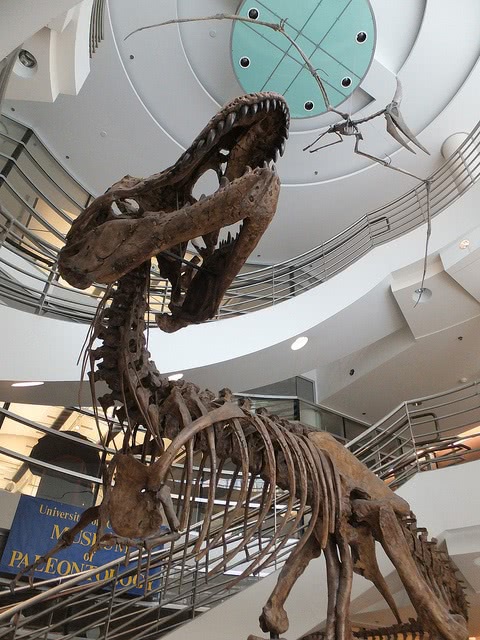
Flickr user Aidan Wakely-Mulroney
- Pioneering research: Berkeley is home to the research team that uncovered much of the evidence that the dinosaurs were driven to extinction by a comet.
- On-campus dinosaur museum: Students have direct access to a dinosaur museum on campus. It supports hands-on learning and research.
- Strong scientific foundation: Students pursuing a degree in geosciences take core classes in mathematics, physics, chemistry, and other sciences. The structure of the program helps ensure you are using creative and independent paths for research.
- Flexible graduate program: Students tailor their exact master’s program to their interests and career goals. They must attend seminars, complete research projects, and turn in a master’s thesis.
4. UNIVERSITY OF MICHIGAN—ANN ARBOR
The University of Michigan offers paleontology courses to undergraduates. However, these only apply to a minor while introducing students to the field. The school’s program has a mission to help improve life and the environment through the work they do.
Why it stands out:
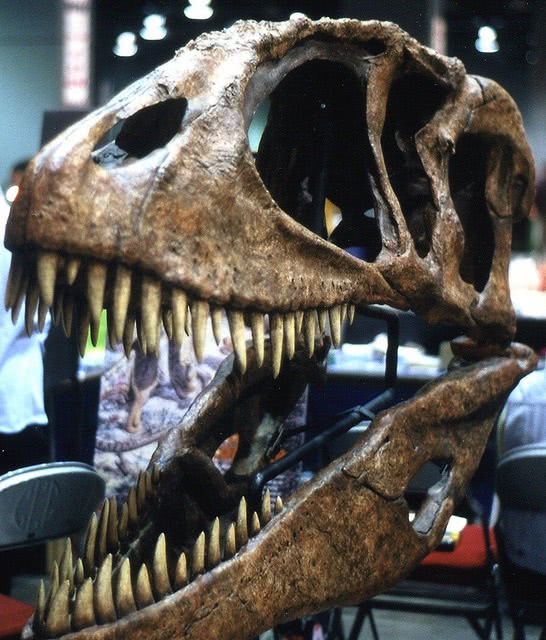
Flickr user James St. John
- Early introduction to paleontology: Students can minor in paleontology. This provides a strong foundation for graduate school.
- Advanced technology: The graduate program uses state-of-the-art technology to support research.
- Hands-on learning experiences: Students will attend field trips throughout the country to get real-world experience with fossils.
5. HARVARD UNIVERSITY
Harvard doesn’t just offer paleontology as a major. It actually has centuries-old fossil collections and state-of-the-art technology for students in the field. Core areas of study include vertebrate paleontology, invertebrate paleontology, and paleoanthropology.
Why it stands out:
- Museum of Comparative Zoology (MCZ): This private Harvard museum houses over 90,000 specimens of fossil fish, amphibians, reptiles, birds, and mammals for students to access.
- Expert faculty: Students will learn and work alongside some of the leading paleontologists in the country.
- Hands-on experience: With access to fossil collections and research facilities, students get hands-on learning throughout their program.
6. YALE UNIVERSITY
Yale’s Department of Earth & Planetary Sciences covers everything from dinosaurs and fossils to ancient plants and evolutionary patterns. Students will learn using a specimen-based approach, while also integrating interdisciplinary approaches.
Why it stands out:
- Yale Peabody Museum of Natural History: Yale’s museum houses millions of fossils and specimens, including famous dinosaur collections.
- World-renowned program: The Department of Earth & Planetary Sciences is famous for its paleontology research and fossil collections.
- Broad studies: Students will dive into areas like taphonomy, biogeochemistry, preserved fossils, trace fossils, and more.
- Yale Institute for Biospheric Studies (YIBS): Yale partners with YIBS to support students in multidisciplinary research in environmental science, ecology, and paleontology.
Choosing the right school for paleontology
While many schools may offer the program you’re looking for, it’s important to know you’re choosing the right one. Think, “Will this school give me the connections, skills, and experience I need to successfully move on to grad school?” Before applying to colleges:
- Research the curriculum and courses that align with paleontology.
- Look for programs that prioritize hands-on learning, such as fossil laboratories and fieldwork opportunities.
- Explore the facilities and resources available on campus. Some schools have partnerships with museums, fossil preparation labs, advanced imaging tools, or state-of-the-art laboratories that support paleontological research.
What can I do with a degree in paleontology?
There are plenty of jobs you can do with a degree in paleontology. Some of the most popular careers include:
- Data Scientist
- Evolutionary Biologist
- Field Research Scientist
- Geologist
- Museum Curator or Researcher
- Science Educator
- University Professor
Is paleontology for you?
These are only five of the best schools for studying paleontology. If you’re serious about learning about dinosaurs, it’s best to plan ahead. You may end up wanting to get your doctorate in the field! Choose your undergraduate degree carefully and consider what program sounds best for you for a graduate degree.
Interested in any of these fantastic schools? Check out College Raptor’s FREE College Match tool to discover if they’re a good fit for you!