Key takeaways
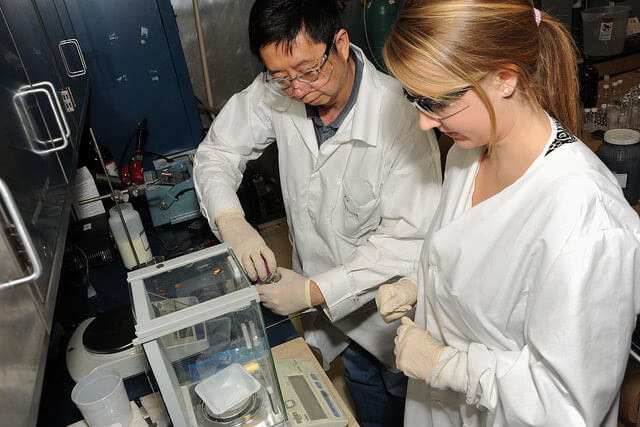
- A research assistant helps lead researchers collect data, organize files, and run experiments.
- To become a research assistant, you should have a strong academic background, great attention to detail, and a thorough understanding of your subject area.
- These positions are available in colleges, government agencies, and private companies.
- Being a research assistant provides valuable experience that helps with future jobs or graduate school.
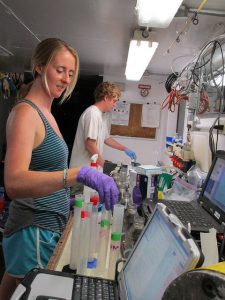
Flickr user FWC Fish and Wildlife Research Facility
Have you ever wondered how scientists discover new medicines or how historians uncover lost facts? Most of the time, they don’t work alone. They have the help of a research team. If you are a student or a recent graduate, you may be asking, “What is a research assistant and how can I become one?” A research assistant provides support to a lead researcher, sometimes called a principal investigator. They handle the daily tasks that keep a research study moving forward. Whether you are working in a lab or a library, this role is a great way to gain professional skills.
What is a research assistant’s primary responsibility?
The main job of a research assistant is to help with research activities. This means they do the legwork for a project. They ensure that the research data is accurate and that the study follows all the rules.
While the lead researcher asks the big research questions, the assistant helps find the answers. They might manage project participants or handle laboratory equipment. Without assistants, many big projects would take much longer to finish.

What are the qualifications and skills needed?
To get one of these research assistant positions, you usually need a strong background in a specific field. For example, a social science research assistant might need to study psychology or sociology.
Common skills for this role include:
- Organization: You may have to manage multiple tasks and keep files in order.
- Critical thinking: You need to understand complex ideas and follow research protocols.
- Communication: You must be able to share research findings with your team.
- Technical skills: Depending on the field, you may need to know how to use laboratory tools and techniques or computer software for data analysis.
What are the types of research assistant roles?
There are many different types of research assistant jobs. Where you work often depends on your degree options.
- Academic institutions: Many undergraduate students work as assistants to their professors. A graduate research assistant may get a stipend or tuition assistance while they earn a master’s degree.
- Government agencies: These assistants often work with government data to help make new laws or safety rules.
- Private companies: In the business world, a research associate or research technician might help a company develop a new product.
- Medical centers: A clinical research coordinator helps run clinical trials to test new treatments.
- Public health organizations: Research assistants in public health settings may also work alongside organizations like the American Public Health Association to support community-based studies and public health initiatives.
What are the daily tasks and responsibilities?
When you look at a job description for this role, you may see many different duties. No two work days are exactly the same.
Typical tasks include:
- Literature reviews: Searching through academic journals to review what other researchers have already found.
- Data collection: Gathering information through surveys, interviews, or lab work.
- Data entry: Putting information into a computer and ensuring data integrity.
- Administrative support: Helping with grant proposals and grant applications to get funding for a project.
How do you succeed as a research assistant?
To be a great assistant, you should be very detail-oriented. A small mistake in data management can change the results of an entire study. It is also important to have a thorough understanding of the research methods being used.
Don’t be afraid to ask questions. Your lead researcher wants the project to succeed. If you aren’t sure how to use a piece of laboratory equipment, ask for help. Being a good team player can lead to better results and a stronger resume.
What are the benefits of research experience?
There are many reasons to become a research assistant. The most obvious benefit is gaining valuable experience. This looks great on a resume when you apply for jobs or a postgraduate degree.
Other benefits include:
- Networking: You can meet faculty members and professionals in your field.
- Academic credit: Some colleges allow you to earn credit for your research work.
- Presenting results: You may get the chance to present research findings at a conference or be listed in academic journals.
- Career advancement: This is often the first step on a career path toward becoming a lead scientist or professor.
How to find research assistant jobs
Finding the right position takes some effort. Here are a few ways to start your search:
- Talk to professors: If you enjoy a specific subject area, reach out to a faculty member. They might need help with their current research projects.
- Check job postings: Check out your school’s career services or sites like O*NET OnLine for openings.
- Network: Attend campus events to meet researchers who are looking for qualified applicants.
- Check the IRB: Look at your school’s Institutional Review Board (IRB) website to see what studies are currently happening on campus.
How to manage your workload
Research can be a lot of work. To stay on track, you should prioritize your tasks. Use a calendar to keep track of deadlines for data collection or lab reports.
Effective communication is also key. If you feel overwhelmed, talk to your supervisor. They can help you manage your time so that the research study stays on schedule.
Do you have what it takes to be a research assistant?
So, what is a research assistant? It is a person who works alongside a lead researcher to help find answers and push the boundaries of knowledge. It takes hard work, previous experience, and a lot of focus. However, the rewards are worth it. You gain skills in laboratory analysis, statistical analysis, and problem-solving that help you for the rest of your life.
Research assistants are the backbone of the academic research world. They play a vital role in every discovery. Whether you are working in social science or a medical lab, your work helps solve real-world problems. By taking on this role, you are starting an exciting career journey full of growth and opportunity.
Are you looking for a college where you can get involved in research? Use College Raptor’s FREE College Match tool to find schools that offer great research opportunities for students like you!