Key Takeaways
- College sports generate billions every year, and athletes are now sharing in that revenue for the first time. In fact, some top athletes are earning millions, and the debate over fairness continues.
- NIL deals let athletes earn money from endorsements, social media, and appearances.
- A landmark 2025 settlement now allows schools to pay athletes directly, in addition to NIL.
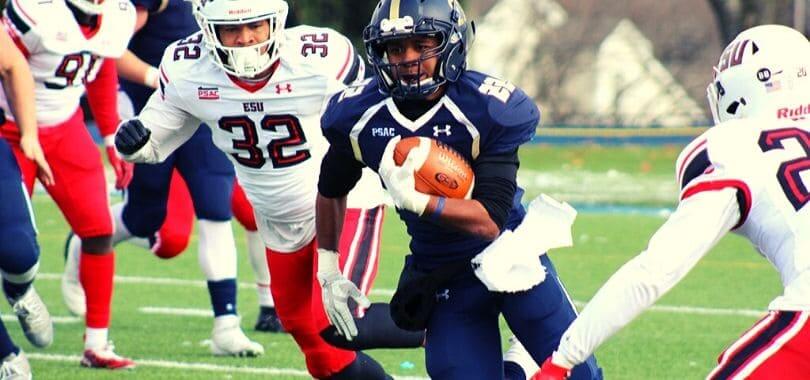
College athletes are earning more money than ever before. Between NIL deals and the new revenue-sharing system that launched in 2025, some of today’s top players are taking home millions while still in school. Here’s a look at who’s leading the pack for highest-paid college athletes and how college sports got to where they are today.
Who are the top 10 highest-paid college athletes (2025-2026)?
Here is a look at the highest-paid college athletes dominating the sports world today:
| Rank | Athlete | School | Sport / Position | Estimated NIL Value |
| 1 | Arch Manning | University of Texas | Football — QB | $5.4 million |
| 2 | AJ Dybantsa | BYU | Basketball — SF | $4.2 million |
| 3 | Jeremiah Smith | Ohio State | Football — WR | $4.2 million |
| 4 | Sam Leavitt | LSU | Football — QB | $4.0 million |
| 5 | Brendan Sorsby | Texas Tech | Football — QB | $3.1 million |
| 6 | Dante Moore | Oregon | Football — QB | $3.0 million |
| 7 | Bryce Underwood | Michigan | Football — QB | $3.0 million |
| 8 | Cam Coleman | University of Texas | Football — WR | $2.9 million |
| 9 | JT Toppin | Texas Tech | Basketball — SF | $2.8 million |
| 10 | LaNorris Sellers | University of South Carolina | Football — QB | $2.7 million |
Source: On3

How college athletics have changed fast
College sports bring in billions of dollars a year through ticket sales, merchandise, and TV deals. For decades, athletes earned scholarships but couldn’t earn income outside of them. That changed in 2021, when new rules let players profit from their name, image, and likeness (NIL).
In 2025, the rules changed again and even more dramatically. Schools can now pay athletes directly out of their own revenue, not just through outside endorsement deals. Combined with NIL, this is reshaping what it means to be a college athlete in 2026.
What is revenue sharing, and how does it work?
In June 2025, a major court settlement, known as the House v. NCAA settlement, changed college sports for good. Schools that opt in can now share revenue directly with their athletes, up to a cap of roughly $20.5 million per school for the 2025-2026 season. That cap applies across all Division I sports, not just football and basketball, and is expected to rise to nearly $33 million per school by 2035.
This is on top of NIL, which still allows athletes to sign endorsement deals and earn money from sponsors and collectives. Together, these two systems mean today’s top athletes can earn significantly more than in past years.
Not every school has opted in. The Ivy League, for example, announced it would not participate, choosing to keep its traditional amateur model intact. Schools that don’t opt in can still offer scholarships, but they can’t share revenue or follow the new roster rules.
How much money do college sports make?
College sports are big business. Programs like Texas Tech, Ohio State, and Michigan earn massive sums from ticket sales and media deals. Schools that made the College Football Playoff earned $4 million each just for participating.
See top colleges by sports profitability: Most profitable college sports programs
What are the arguments for and against paying athletes?
Should college athletes get paid? Even with revenue sharing now in place, the debate continues.
Arguments for paying athletes:
- Players train full-time and risk injuries that may affect their future.
- Athletes help generate the revenue that schools and conferences depend on.
- NIL and revenue sharing now let top performers earn real money while still in school.
Arguments against paying athletes:
- Smaller schools may not have the budget to compete with Power Four programs.
- Uneven pay could affect recruiting fairness.
- Some worry the new system favors football and basketball over other sports.
Who pushed for this change?
Former UCLA basketball player Ed O’Bannon sued the NCAA over the use of his image in video games, helping set the stage for today’s NIL era. More recently, athletes like Paige Bueckers, Garrett Nussmeier, and Cooper Flagg have used NIL deals to build their earnings while still in school, and the House settlement now adds a second income stream on top.
Where the debate stands now
College athletics have shifted faster in the past two years than at any point in NCAA history. Supporters see revenue sharing and NIL as overdue fairness for the athletes who generate the money. Critics worry about competitive balance between large and small programs and how smaller sports will be funded going forward.
What’s clear is that today’s top college athletes have more ways to earn than ever before, and that shift is likely to keep evolving in the years ahead.
Turning talent into opportunity
Whether you are aiming for a massive NIL deal or looking for a traditional scholarship, finding the right school is the most important step for your future. Check out the 2026 Rankings for Best Colleges and use College Raptor’s College Match tool to find your school.
Which sports have the highest-paid college athletes?
College football and men’s basketball have the highest-paid college athletes. Because these two sports bring in billions of dollars from massive TV networks and ticket sales, companies and university athletic programs spend the most money on top-performing players in these sports.
Do the highest-paid college athletes get to keep all their earnings?
Yes, the highest-paid college athletes get to keep their earnings, but they must follow strict rules. They have to report all of their income to a national clearinghouse to ensure the contracts are legal, and they also have to pay taxes on their millions.
Do the highest-paid college athletes get paid during the offseason?
Yes, the highest-paid college athletes earn money year-round. While their direct school revenue share aligns with the competitive season, their largest corporate sponsorships, social media marketing campaigns, and merchandise deals pay out continuously through the spring and summer months.