Key takeaways:
- The Seven Sisters are a group of private liberal art schools focused on women’s education in the Northeast United States.
- The seven institutions are Barnard College, Bryn Mawr College, Mount Holyoke College, Radcliffe College, Smith College, Vassar College, and Wellesley College.
- Most of the colleges only accept women to their undergraduate school, though Vassar College is coeducational and some accept men to graduate programs.
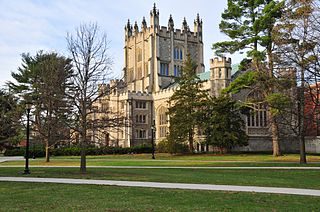
Wikimedia Commons user Sabatheus
You’ve heard of the Ivy Leagues – have you heard about their historical counterpart, the Seven Sisters? A collection of private liberal art schools in the Northeast US, these colleges have been invested and focused on women’s education since their founding. The group came about in response to most of the Ivy Leagues only admitting men in the early 20th century and a desire to offer comparable education to women. Keep reading to learn about the history of the Seven Sisters, how they formed, and the seven institutions that make up the group.
What are the Seven Sisters?
The Seven Sisters colleges are a collection of private liberal arts schools that have historically focused on women’s education. They include:
- Barnard College
- Bryn Mawr College
- Mount Holyoke College
- Radcliffe College
- Smith College
- Vassar College
- Wellesley College
Vassar College is the only school that is fully coeducational today, however Bryn Mawr, Mount Holyoke, and Smith accept men to their graduate programs. Radcliffe College no longer exists as an independent school – it merged with Harvard University in the late 20th century.
All Seven Sisters are located in the Northeastern United States. They have smaller class sizes, high retention rates, and low acceptance rates. Many are top rated, too. On College Raptor’s College Raptor’s 2026 Best Liberal Arts Colleges Rankings, Wellesley came in 8th, Barnard 10th, Smith 16th, and Vassar 18th.
The History
The group started in 1915 as the Four College Conference in response to Vassar President Henry Noble MacCracken’s call “to deliver women opportunities for higher education that would improve the quality of life for the human family and that would put them on an equal footing with men in a democracy that was about to offer them the vote.” It originally consisted of Mount Holyoke, Smith, Vassar, and Wellesley.
Barnard, Bryn Mawr, and Radcliff joined in 1926 and the consortium was then named the Seven Sisters, possibly in reference to the seven sisters of Greek mythology, Pleiades. The schools aimed to work together to improve women’s education, deliver faculty salaries on par with the Ivy Leagues, raise funds, develop admission standards, and more.

A list of the Seven Sisters colleges
Here’s a quick look at the schools that make up the Seven Sisters:
BARNARD COLLEGE
- Location: New York, NY
- Enrollment: 3,269
- Acceptance rate: 8%
Barnard College was founded in 1889 in response to Columbia University’s refusal to admit women to Columbia College. An all-women’s school still, it offers up to bachelor’s degrees, has a 96% first year retention rate, and 93% graduate within six years. 91% of the Class of 2023 was employed or attending graduate/professional school within six months of graduation.
BRYN MAWR COLLEGE
- Location: Bryn Mawr, PA
- Enrollment: 1,685
- Acceptance rate: 29.4%
Bryn Mawr College opened in 1885 and offers up to Doctorates. While the undergraduate college is still only women, the school began accepting men to its graduate programs in 1931. Alumni include Emily Green Balch, Katharine Hepburn, and Edith Hamilton. 92% return after completing their first year and students enjoy an 8:1 student-to-faculty ratio.
MOUNT HOLYOKE COLLEGE
- Location: Hadley, MA
- Enrollment: 2,299
- Acceptance rate: 36%
Founded in 1837, Mount Holyoke College is the oldest Seven Sisters college. It’s also part of the Five College Consortium in Massachusetts. Men are accepted into graduate programs, but only women are admitted to its undergraduate school. On average, accepted class of 2028 students had a 3.9 unweighted GPA and 75% were in the top 20% of their high school class.
Radcliffe College
- Location: Cambridge, MA
Radcliffe College was a Seven Sisters school but it merged with Harvard University in 1999, where it became the Radcliffe Institute for Advanced Study. Also known as Harvard Radcliffe Institute, it offers the Fellowship Program to support artists and scholars, research projects, conferences, and more.
SMITH COLLEGE
- Location: Northampton, MA
- Enrollment: 2,873
- Acceptance rate: 21%
Another member of the Five College Consortium, Smith College opened its doors in 1875. Some past students include Margaret Mitchell, Sylvia Plath, Julia Child, and Barbara Bush. 35% of students study abroad. There are over 80 areas of study, with many majoring in Research and Experimental Psychology, Biology, and Political Science.
VASSAR COLLEGE
- Location: Poughkeepsie
- Enrollment: 2,462
- Acceptance rate: 18.6%
Vassar College is the only Seven Sisters school that has coeducational undergraduate programs. The 1,000-acre campus is an arboretum and home to National Historic Landmarks. 94% of students are employed, furthering their education, or participating in a fellowship or volunteer work within six months after graduation.
WELLESLEY COLLEGE
- Location: Wellesley, MA
- Enrollment: 2,407
- Acceptance rate: 14.1%
47.6% of students accepted to Wellesley College enroll in this top-rated school, which has a 7:1 student-to-faculty ratio, 96% first year retention rate, and 92% six year graduation rate. Popular majors include Econometrics and Quantitative Economics, Computer and Information Sciences, and Research and Experimental Psychology.
How to get in: improving your acceptance odds to a Seven Sister school
All of the Seven Sisters schools still operating today are extremely or highly selective. Want to improve your admissions chances? You need a standout application with a focus on:
- academic rigor
- a high GPA
- strong ACT/SAT scores
- notable volunteer work
- a well-written essay.
You can use College Match to see how you stack against previously accepted students. Find out your acceptance odds into these schools today—for FREE!