Key Takeaways
- Homophones are words that sound the same but have different spellings and meanings, so it’s extremely important to understand their usage and context.
- Homophones are often challenging because of how much they sound alike, their different spelling variations, the confusing sound-to-letter relationship, and different types like homographs.
- From their/they’re/there to affect/effect and it’s/its, we’re giving you 20 must-know homophones with definitions and sentence examples.
Know Your Homophones for the ACT or SAT
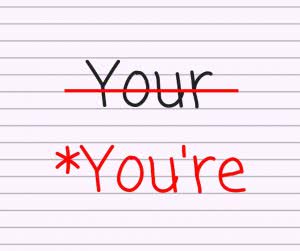
What are homophones, you ask? These are words that sound the same but are spelled differently and have completely different meanings. And if you’re wondering—yes, they do show up on the ACT and SAT—so it’s important to be familiar with them.
Think you’re ready to handle them? Let’s see:
- Do you have to meet the principle or principal?
- Are the teacher’s efforts in vein or in vain?
- Should you pore over or pour over your English textbook?
The English language is full of tricky challenges—and homophones are no exception. But not to worry, we’ve put together a guide of must-know homophones to help you through the ACT or SAT. Think of it as your homophone cheat sheet for test day.
Why You Should Know Your Homophones for the ACT or SAT
Isn’t grammar fun? Even English whiz-kids need a refresher before the ACT or SAT. If homophones make you bawl (or is it ball?), you will find that they can be particularly frustrating when answering the ACT or SAT. This is because, unlike other questions, there is no trick to answering questions that involve homophones. The only way to get it right is by:
- Memorizing the spellings of homophones in the English language
- Knowing the definition of each word
- Understanding the difference between the pairs of homophones
Why Homophones Are Challenging
Because homophones sound the same but have different meanings and spellings, choosing the right one comes down to context. Let’s look at a few common sources of confusion when it comes to homophones:
- Sound-Alike Words: This is the most common confusion people have, especially with words like “their,” “there,” and “they’re.” They sound identical, but misusing them can change the meaning of a sentence, making writing or speaking more prone to errors.
- Spelling Variations: Spelling rules in the English language can be inconsistent and it’s not always obvious how a word is spelled just by hearing it. For example, sometimes “w” isn’t pronounced, giving us homophones like “wrap” and “rap.” In another case, “bare” and “bear” sound the same, but there is no indication on how to spell it unless you understand the context.
- Confusing Consonants and Vowels: English doesn’t always use a straightforward sound-to-letter relationship. Therefore, consonants and vowels can sometimes seem misleading, especially if you aren’t seeing them in context. For example, “days” and “daze,” “pair” and “pear,” or “sight” and “site.”
- Homographs: Homographs are spelled the exact same but have different meanings and sometimes different pronunciations. For example, “tear” (to rip something) and “tear” (a drop of liquid that falls from the eye).
20 Must-Know Homophones
With over 100 homophones in the English language, it may seem like a tall order to know your homophones, but it’s not impossible. The best way to master them is by taking the time to understand the difference between some of the more commonly used homophones and doing regular practice lessons that you can find online.
Here are some of the most notorious ones and their correct usage:
1. To, Too, Two
To is for showing direction, too means also, and two is the number 2.
Examples: I’m going to the park. I want to go, too. I saw two ducks there!
2. You’re, Your, Yore
You’re is a contraction of “you are,” your shows possession, and yore refers to a time long ago.
Examples: You’re going to love this. Is that your coat? People dressed differently in the days of yore.
3. There, They’re, Their
There refers to a place, they’re is a contraction of “they are,” and their shows possession.
Examples: Put the book over there. They’re bringing snacks. Is this their car?
4. Weather, Whether
Weather refers to the conditions outside, and whether expresses a choice or condition.
Examples: The weather looks sunny today. I don’t know whether I should bring a jacket.
5. Ad, Add
Ad is short for advertisement, and add means to include something.
Examples: I saw an ad for shoes. Did you add milk to the shopping list?
6. Passed, Past
Passed is the past tense of “pass,” and past refers to a time before now or a direction.
Examples: We passed the school on our walk. The past year has been amazing.
7. Waist, Waste
Waist is the part of your body above your hips, and waste refers to unused or thrown-away items.
Examples: My dress fits snugly around the waist. Don’t waste your food.
8. Affect, Effect
Affect is usually a verb meaning to influence, and effect is usually a noun meaning the result.
Examples: The rain will affect our plans. The effect of the storm was widespread flooding.
9. Whose, Who’s
Whose shows possession, and who’s is a contraction of “who is” or “who has.”
Examples: Whose jacket is this? Who’s going to the party later?
10. Compliment, Complement
Compliment means saying something nice, and complement means something that completes or pairs well.
Examples: I complimented her on her outfit. Her scarf is the perfect complement to the dress.
11. Brake, Break
Brake refers to stopping a vehicle, and break means to shatter or separate.
Examples: Use the brake to stop the car. Be careful not to break that vase.
12. Hear, Here
Hear refers to listening, and here refers to a location.
Examples: Did you hear that noise? Come over here!
13. Whole, Hole
Whole means complete, and hole is an empty space.
Examples: I ate the whole pizza. There’s a hole in my sock!
14. Stare, Stair
Stare means to look intently, and stair is a step in a staircase.
Examples: Don’t stare at people; it’s rude. The stair is wobbly—be careful!
15. Know, No
Know means to understand or be aware, and no is the opposite of yes.
Examples: I know the answer to this question. No, I don’t need any help.
16. Accept, Except
Accept means to agree to or receive, while except means excluding.
Examples: I accept your apology. Everyone except Mary attended the meeting.
17. Illusion, Allusion
Illusion refers to a false appearance or impression, while allusion is an indirect reference.
Examples: The magician created an illusion of a floating card. Her story included an allusion to Greek mythology.
18. Sight, Cite, Site
Sight refers to vision or something you see, cite means to reference something, and site is a location.
Examples: The sunset was a beautiful sight. Don’t forget to cite your sources. The construction site is busy.
19. It’s, Its
It’s is a contraction of “it is” or “it has,” while its shows possession.
Examples: It’s raining outside. The cat cleaned its fur.
20. Plain, Plane
Plain means simple, or a flat, open area of land. Plane refers to an aircraft or a flat surface.
Examples: Her dress was plain but elegant. The plane landed safely on the runway.
Practice Your Homophone Knowledge
Sometimes homophones are easy to spot and other times they can be tricky. Take this short quiz and see how you do:
- I need to __________ the letter before sending it. (Write/Right)
- Jack was ___________ hours late to school. (To/Too/Two)
- The store just celebrated _____________ ten year anniversary. (Their/They’re/There)
- They tried to __________ the painting. (Steel/Steal)
- I couldn’t ________ what he said. (Hear/Here)
Practicing homophones in context through sentences can really help you learn their pronunciations, spellings, and meanings so that you can be ready on test day.
Answer Key:
- Write
- Two
- Their
- Steal
- Hear
Tips for Remembering Homophones
Memorizing homophones is not something you should do at the last minute, so start early and spend at least a few minutes every day studying them to increase confidence. Here are some recommendations to help you remember homophones:
Create Mnemonic Devices: Pair a phrase with each homophone to help you remember their meanings. For example, a “piece” of “pie” for piece/peace, or you “hear” with your “ear” for hear/here.
Practice With Flashcards: Repetition helps! Write your homophones on flashcards for daily practice while you are brushing your teeth or getting ready for the day.
Read and Write Regularly: Just seeing and using homophones in context will naturally improve your memory.
Get a Tutor: Not only can a tutor help you out with homophones, but they’re a great option for ACT/SAT prep in general!
While we’ve listed some of the most common homophones, know that there are even more out there to learn! Don’t get too caught up in homophones though—they’re just one part of what you need to know when preparing for the ACT or SAT. Remember to study well, stay positive, and take care of yourself as you approach test day. Best of luck!
Want to see how your ACT or SAT score affects your acceptance odds? Use College Raptor’s College Match tool and find out today!