Key Takeaways
If you’re a physical learner, you might find that sitting still or watching lectures doesn’t help your brain retain information. This is because physical learners learn best with movement and hands-on experiences when learning. To help you stay focused and feel more confident when studying, we’ve outlined 10 tips below for physical learners:
- Use Flashcards or Other Physical Materials
- Take Study Breaks
- Draw Things Out
- Study With Movements
- Get a Standing Desk
- Use Interactive Tools
- Practice Organized Note Taking
- Role Play
- Join a Study Group
- Look for Active Learning Opportunities

Flickr user k4dordy
If you were someone who found the blocks helpful when learning addition or subtraction, or you remember things best from field trips and lab experiments, you might be a physical learner. This learning style describes students who do their best when they have a hands-on approach to learning. A physical learner—also called a kinesthetic learner because of the movement involved—tends to excel when they can directly engage with the material themselves.
Sound like you? If so, adjusting to traditional study methods might feel a bit challenging at first. However, there are study tips and tricks designed with physical learners like you in mind to help make the most of your learning style. Here are 10 to get you started:
1. Use Flashcards or Other Physical Materials
Flashcards can be very useful for physical learners. Rather than simply staring at the information in your notes or textbook, you have to physically shuffle them, turn them over, and actively write down the details. That simple movement of the cards can help you retain information.
- Pro tip: Try hand-writing your flashcards to help with memory retention.

2. Take Study Breaks
If you’re a physical learner, you might consider sitting still for a long time to be challenging. That’s why it’s important to take breaks and move around. These breaks don’t have to be long—just a few minutes to stretch, walk around, or reset after an hour or so of studying (or even after completing a section or chapter). Remember to pay attention to your limits. How long can you go without movement? Use that information to plan your break times.
- Pro Tip: Try not to plan your class schedule back-to-back. Give yourself the mental and physical breaks you need to stay focused and do your best.
3. Draw Things Out
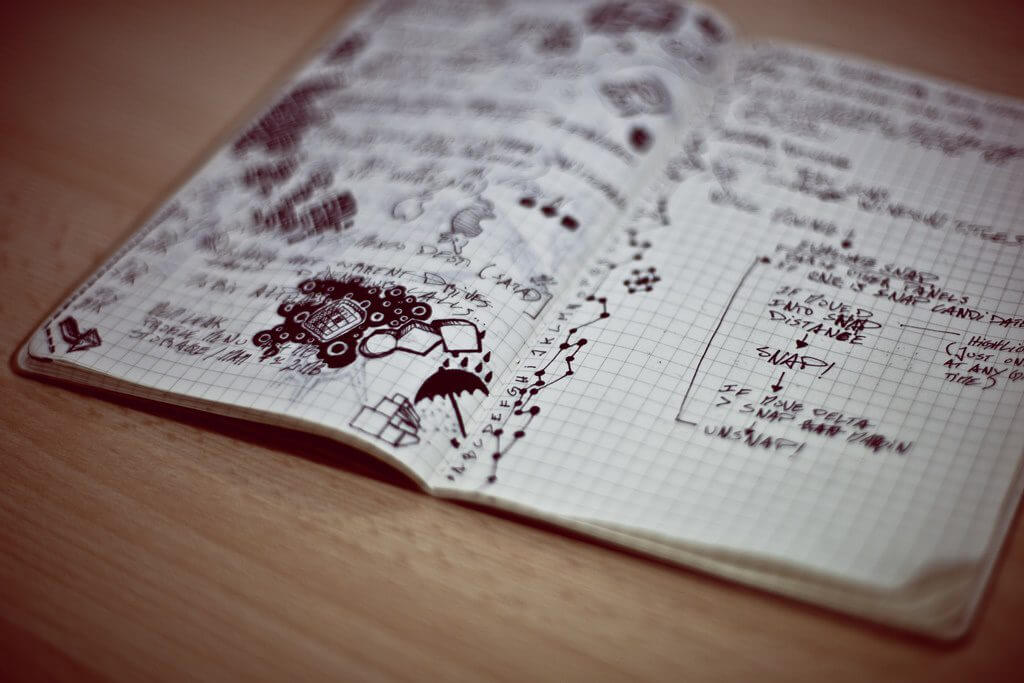
Much like a visual learner benefit from seeing how information connects, a physical learner generally likes to create those connections themselves. Drawing diagrams, charts, or mind maps can be especially helpful because the movement of your hand reinforces what you’re learning. You don’t have to be artistic to use this study tool—the key is to make it personal and, therefore, more relevant to you.
4. Study With Movements
The beauty of finding study techniques that work for you is that you can make learning fun. For physical learners, this might mean assigning movement to your material. These can be small and subtle, like tapping your thigh, doodling specific shapes, or tracing patterns while you review. Small movements like these are especially good for lectures and classes—so long as they are discreet.
On the other hand, don’t forget to try out larger movements when studying. Walk around while reading notes or lay out facts on the floor and assign a movement to each. For example, you might hop when you think of Hamlet or skip when reviewing Ophelia. When testing on the information, remembering the physical movement can help bring the details forward.
5. Get a Standing Desk
A standing desk can be great for physical learners because it allows for movement and engagement without interrupting focus. In fact, standing while studying can actually reduce fidgeting and help you concentrate for longer periods of time. While some standing desks are stationary, others have wheels so that you can switch up your study spots.
- Pro Tip: Pair your standing desk with a walking pad so that you can move and study at the same time.
6. Use Interactive Tools
Look for online simulations, games, or interactive videos that let you actively participate in the learning process. Instead of just passively reading or watching a video, you get to do something with the information. Whether it’s clicking, dragging, or matching, these interactive study tools involve slight movement that can help the information stick.
7. Practice Organized Note Taking
This one might sound simple, but just the act of handwriting notes can help with memory retention—especially when they are neat and colorful. Use highlighters of a certain color to help give your brain visual cues. For example, blue might be for definitions, while green might highlight important dates. Make use of sticky notes, too! Bright notes on your wall, desk, or even bathroom mirror can help with studying.
8. Role Play
Believe it or not, acting out a scene or certain process can greatly increase a physical learner’s ability to remember it later on. Just by speaking and physically interacting in a new way with the material, you can apply it in a way that makes it understandable.
- Pro Tip: Get your friends together for a study party and make it fun! Reenact a historical event, conduct a mock interview, or act out a scientific process—you might be surprised at how well it sticks.
9. Join a Study Group
Study groups are ideal for physical learners because they’re hands-on, active, and stimulating for the brain. The interaction and change of pace help you stay focused and keep you from the monotony of studying solo. Just remember, while it’s fun to study with peers, make sure you avoid the distractions!
10. Look for Active Learning Opportunities
Depending on your major, there can be many opportunities to work hands-on with the material. Some fields will have labs, projects, or research that you can get involved with, but don’t be afraid to ask your professors if there is something else you can do. You never know what opportunities may be waiting for you!
Whether you’ve always known you’re a physical learner or you’re just starting to notice it, understanding your learning style can make studying a lot more effective. If sitting still in a lecture or trying to read over your notes for the seventh time drives you crazy, that’s okay. There are plenty of useful study methods for physical learners that can help you out. Try some of these study methods and see if they increase your confidence during your next exam. Sometimes, it’s just about finding the study habits that match the way your brain works best.
Wondering which major is best for you and your learning style? You can use College Raptor’s FREE College Match tool to find your ideal college based on cost, acceptance odds, and potential financial aid options!