Flickr user Don Graham
- In most cases, in-state tuition is much less than out-of-state college costs.
- On average, tuition for a public 4-year in-state school cost $9,750 in 2022-23 vs $28,297 for out-of-state tuition.
- Scholarships, reciprocity programs, and other financial aid packages can reduce the cost of tuition.
When researching colleges, students often consider the proximity to home. Some prefer to attend an in-state school because they feel more comfortable knowing they’re closer to home. Others can’t wait to begin their adventure far away, preferring to attend an out-of-state school. However, out-of-state tuition can be drastically more expensive vs in-state tuition, especially for public colleges. To help you decide the right school for you, we broke down the differences between the tuition rates and provided some insight into college affordability below.
In-State Vs. Out-of-State Tuition
If you compare public colleges and universities, you’ll likely find that out-of-state tuition is considerably higher than the cost of attending an in-state school. The state gives its public in-state schools substantial funding from tax dollars to subsidize the cost of tuition for its residents.
For example, a New York resident attending a SUNY school will pay in-state tuition. If you’re a Wisconsin resident attending a SUNY school, you’ll likely pay the out-of-state rate, which can cost you thousands more than it cost the New York resident.
However, saying out-of-state tuition is always higher isn’t always true. For example, private institutions usually have the same tuition rate for students no matter where they live. Financial aid packages can also further lower the total cost of attending an out-of-state school. Enough scholarships and you could find it’s cheaper than attending your in-state institution. A school’s sticker price is rarely the full story.
Average In-State Vs. Out-of-State Tuition Rates
According to the 2023 Integrated Postsecondary Education Data System (IPEDS) data from the National Center for Education Statistics (NCES), full-time students paid an average of $9,750 in tuition and fees to attend a public 4-year in-state school in the 2022-2023 academic year. Comparatively, out-of-state students spent $28,297 and private college students paid $35,248.
Tuition and fees refers to the cost to attend courses – it doesn’t include room and board, books, transportation, or other college expenses. Your exact costs will vary depending on the college you chose as well as your state.
Here’s a look at some other interesting data and averages from the 2023 report for 4-year institutions:
- Florida has the lowest in-state tuition rate, at $4,540.
- South Dakota has the lowest out-of-state tuition among 4-year institutions – $12,987 – which is barely above what in-state students pay ($9,079).
- Other affordable in-state and out-of-schools include Wyoming, Washington D.C., and Nevada.
- Vermont is the most expensive for in-state and out-of-state students, where they spend $17,600 and $41,900, respectively.
- New Hampshire, Pennsylvania, and Connecticut are on the higher end for in-state tuition rates, while Michigan, Connecticut, and Virginia are also expensive out-of-state options.
Tuition rates can also differ among 2-year institutions, such as community colleges:
- Nationally, in-state students spend around $3,598, while out-of-state residents pay $8,565.
- California is the most affordable for state residents – $1,286.
- South Dakota is the most expensive for in-state students, at $7,412, but it’s actually cheaper to attend as an out-of-state student ($7,257).
- Nebraska has one of the lowest out-of-state rates, at $4,308, just $1,000 more than in-state rates.
- Tennessee is the most expensive for out-of-state students – $17,258.

How To Lower the Cost of Out-of-State Tuition
A higher out-of-state tuition rate shouldn’t immediately scare you off of a school. There are several ways to lower the total cost, including these options and strategies:
Use Reciprocity Programs
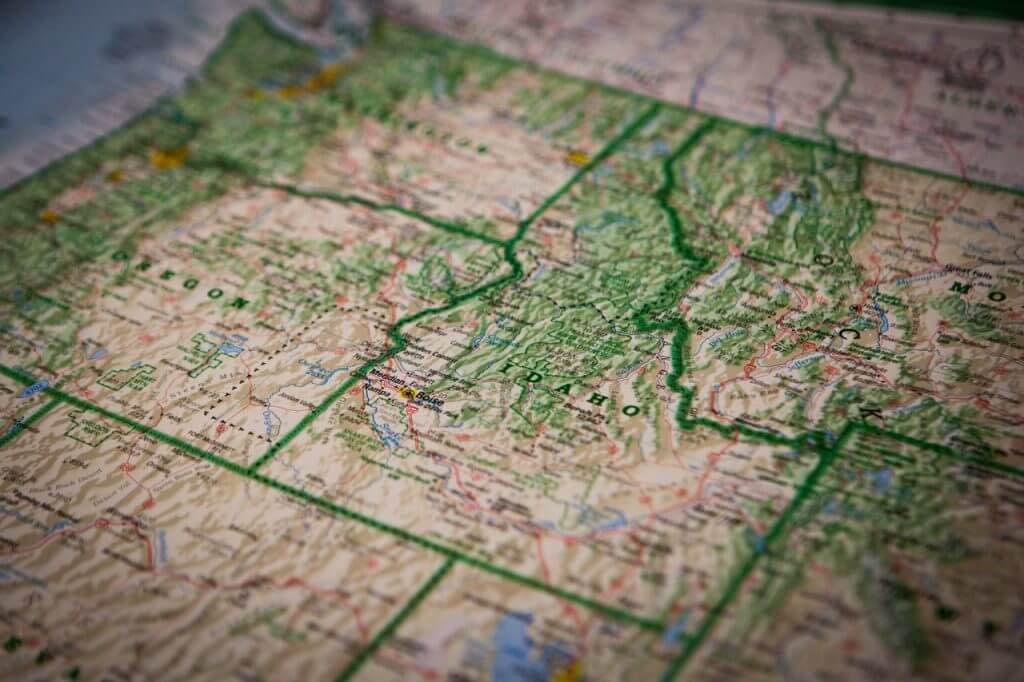
Most states have reciprocity agreements with neighboring states, allowing students to attend a school with the in-state rate. For example, California and Idaho are part of the Western Undergraduate Exchange program. If you’re a resident of Idaho but want to attend a public school in California, you could qualify for in-state tuition in California.
Apply to Scholarships
States offer exclusive scholarships to their residents, which further lowers the cost of in-state tuition. However, that doesn’t mean there aren’t other scholarships. There are more than 1.7 awards for students. Winning can put a dent in the cost and help lower debt, especially if it’s a large award or if you win several smaller ones. Some states and colleges even offer financial aid specifically for out-of-state students.
Complete the FAFSA
The Free Application for Federal Student Aid (FAFSA) isn’t just for federal student loans. The government also uses it to determine grant recipients, and colleges use the information to offer financial aid packages. If you complete the FAFSA, your out-of-state school might give you a package that makes it much more affordable than your in-state college.
Consider Out-of-State Private Colleges
If you have your heart set on a state or region and not a particular public college, consider applying to private schools, too. They typically don’t have in-state or out-of-state rates. While private colleges and universities often have higher sticker prices than public schools, they tend to have larger endowment programs. Depending on your financial situation, you might receive offers that allow you to attend a private college at or even below the cost of a public college.
Choosing Between In-State and Out-of-State Schools
Money is only part of the equation that should come into play when deciding whether to attend an in-state or out-of-state school. There are two other factors to consider:
Proximity to Your Hometown
Are you someone who can’t be without your family? Or are you someone who can’t wait to move out of state?
You can visit home more often if you’re in-state. For some, knowing family is close makes the transition to college easier. You could also save more on college costs if you decide to live with your family and commute to college. If you’re attending out of state and want to visit often, you’re going to pay a lot in transportation costs.
However, you might find it difficult to step outside your comfort zone if you stay close to home. You could limit your potential for new experiences and independent growth.
Academic Programs
Depending on your state, you might have very few public schools to choose from. It may also be difficult to find a college that has a strong program in your intended major or a school that fits your needs outside of the classroom.
If you’re thinking about attending out of state, you’ll have a wider range of schools to choose from, with a broad academic and non-academic variety. You’ll be more likely to find a campus that’s a better fit for your personality and goals.
How to Decide the Right College For You
There is no right answer to the question, “In-state or out-of-state?” The answer is different for everyone. You need to think about your own wants, needs, and goals when it comes to your college experience. For many, cost is a serious consideration. Graduating with less debt is a solid reason to pursue an in-state school that checks all or most of your needs. However, you’ll need to apply to out-of-state colleges if you’re limited on options or your state schools don’t have your intended major.
Ultimately, you have to balance your financial circumstances and college goals when choosing between in-state and out-of-state tuition. To better compare your options and related costs, we recommend signing up for College Match where you can discover personalized college matches, cost estimates, acceptance odds, and potential financial aid for schools around the US—for FREE!