Key Takeaways:
- The average public in-district community college’s tuition was $4,072 for full-time, first-time degree/certificate-seeking undergraduates in the 2023-24 academic year.
- In comparison, attending a public in-district 4-year school was $8,878.
- Other costs, including the price of books, transportation, and living expenses, can increase the total price of attending a community college.
- Community college students can save money on education costs by completing the FAFSA, applying for state programs, and living with family.
With costs rising every year, with seemingly no end in sight, students and their families turn to money-saving tips and tricks to make college more affordable. One great trick? Attending community colleges. Community college fees are typically significantly lower than that of any private college—or public colleges, for that matter. So how much does community college cost?
Let’s break it down.
How Much Does Community College Cost?
 According to the National Center for Education Statistics (NCES) and the Integrated Postsecondary Education Data System (IPEDS), the average cost of tuition at a community college in the 2023-24 academic year was between $4,072 and $17,786 for first year students.
This range can be affected by the type of school and the student’s location. For example, an in-district public 2-year college tuition was $4,072 on average for first years during the 2023-24 school year. However, if you chose to go to a public community college out-of-state, it was $8,912 on average.
But, tuition and fees aren’t the only costs associated with college. Students will also have to pay or find funding for books, supplies, food, housing, transportation, and more. Depending on your situation, you could end up paying over $17,950.
How Much is Community College Tuition?
Here’s a look at how tuition can vary among 2-year schools for full-time, first-time degree /certificate-seeking undergraduates using the data from IPEDS:
| School Type | 2023-24 Average Tuition Cost |
| Public In-district | $4,072 |
| Public In-state | $4,815 |
| Public Out-of-state | $8,912 |
| Private Nonprofit | $17,786 |
| Private For-profit | $16,477 |

Community College Food and Housing Costs
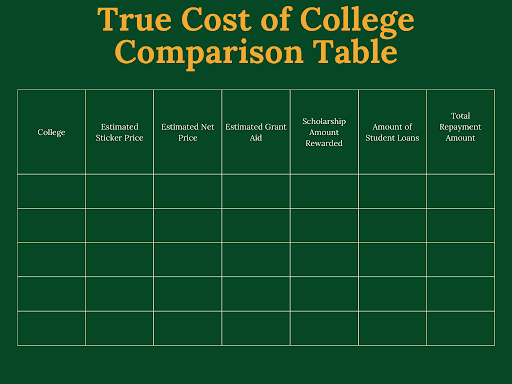
To determine the true cost of college for you, you’ll need to consider your living situation. If you’re living with family, for example, your food and housing expenses are going to be much less expensive than someone who is living in an apartment. But if you’re pitching in for groceries or rent while you attend school, you’ll need to account for that.
IPEDS has some numbers for average food and housing costs for full-time community college students, but not all community colleges offer on-campus housing. If you’re living in an apartment rather than at home or on-campus, your expenses might vary depending on your location, rent, and other factors.
| School Type and Student Location | 2023-24 Average Food and Housing Cost |
| Public On-campus | $8,165 |
| Public Off-Campus* | $11,462 |
| Private Nonprofit On-Campus | $10,597 |
| Private Nonprofit Off-Campus | $12,053 |
| Private For-profit On-Campus | $7,960 |
| Private For-profit Off-Campus | $12,012 |
*Student is living off-campus and not with family.
Other Community College Expenses
All students, regardless of their living situation, will need to pay for books and supplies. The exact cost depends on the student’s class schedule and program. On average, students will spend between $1,341 and $1,640 per year on books and supplies. Other factors, such as fees, transportation costs, extracurriculars, can also increase the price of attending a community college.
Is Community College Cheaper than a 4-Year College?
Yes, in most cases, attending a community college is much less expensive than a four-year school. In 2023-24, average tuition at a public in-district 4-year school was $8,878. At a private nonprofit 4-year, it was $32,575. Living expenses at 4-year colleges also tend to be higher in comparison.
However, most community colleges only offer associate’s degrees. If you want a bachelor’s, you’re going to need to attend a 4-year college or university.
Should You Attend Community College First?
Attending a community college first before attending a 4-year institution can help you save thousands in education costs. Known as a 2+2 program, students earn their associate’s degree first before transferring to a 4-year college or university. Students stand to save on tuition, fees, food, and housing costs by going this route, especially if they live with their parents while they pursue their associate’s.
How To Pay for Community College
Even though community college is less expensive than a 4-year school, it’s still out of financial reach for many graduating high school seniors. Some may pay out of pocket, but here are some other ways and tips students can cut costs and better afford their education expenses:
1. Complete the FAFSA
Before anything else, you should complete the Free Application for Federal Student Aid (FAFSA). This application offers grants and federal student loans at lower interest rates and better repayment terms than private student loans. Colleges also use the FAFSA to determine their financial aid packages. While total endowment may be less at community colleges compared to other schools, many still offer some money to qualifying students.
2. Apply for State-Funded Programs
Did you know that many states have programs dedicated to making community college (or college in general) more affordable for students? Michigan, New Mexico, Nevada, Connecticut, and more have free college tuition programs with few or some limitations, grants, and scholarships for community college students. You may end up paying little to nothing for your associate’s degree. Program eligibility can depend on merit, financial need, or other factors.
3. Apply for Other Financial Aid
Scholarships aren’t always just for 4-year colleges. Students can put awards they win towards community college tuition and associated costs. Even small awards add up, so don’t overlook those $100 scholarships!
Private student loans can also help cover the gap between what you have and what you need. However, they have higher interest rates and fewer repayment options compared to federal student loans.
4. Work
Many students work while they attend community college. While it can be difficult to juggle both, employers in college towns tend to be more understanding about school commitments and responsibilities.
If finding employment around your schedule is tough, consider remote jobs or gig work to help cover costs. You can also complete the FAFSA for the Federal Work-Study (FWS) program. If you’re found eligible, you’ll be able to apply for on-campus jobs at participating schools.
5. Live With Family
One of the biggest ways to cut costs while you attend community college is to continue living with family. While you may be asked to contribute to rent or groceries while you stay there, these bills tend to be much less than what you’d pay if you lived on-campus or in an apartment.
If you can’t live with family and have to live off-campus, finding roommates is a fantastic way to keep costs lower while you attend school.
In comparison, attending a community college is much less expensive than a 4-year school. However, your living situation, education goals, and career could impact your options, total costs, and available paths. If you’re not quite sure how to proceed with your education, review your options with your college advisor.
Thinking about paying for college, whether for a 2-year or a 4-year school, can be stressful. Having a plan for your finances is a must – and scholarships can help. Use College Raptor’s FREE Scholarship Search tool to find the awards you qualify for and easily apply.