Key takeaways
- Colleges may check your social media to learn more about your abilities, interests, and how you spend your time to get a fuller picture of who you are.
- One survey showed that 28% of admissions officers look at applicants’ social media when reviewing applications, while 33% believe it’s an invasion of privacy.
- Before applying to schools, go through your social media profiles and review your posts, comments, messages, images, and accounts you follow—or set your profiles to private.

A 2020 survey showed that 36% of Admissions Officers look at applicants social media.
Almost everyone is on social media these days. Whether you’re scrolling TikTok, posting on Instagram, or watching YouTube, social media is where people go to connect, stay informed, learn new hobbies, or get a few laughs in. And because it’s such a big part of our everyday lives, it sometimes plays a role in the college admissions process.
So, are colleges truly interested in your social media presence? According to a 2023 Kaplan survey, 67% of admissions officers consider that viewing a prospective student’s social media pages is fair game. Public profiles can reveal a lot about a student, and while you can’t be certain whether colleges will check your social media, it is best to stay on the safe side. Here are some tips for managing your social media profiles during the college admissions process, ensuring they present you in the best light possible.
What percent of colleges actually look at social media profiles?
In the previously mentioned Kaplan study, it was found that while a strong majority of colleges are open to the idea of investigating social media profiles, only 28% say they actually do. And on the opposing view, 33% say that looking at an applicant’s social media is an invasion of their privacy.
Christine Lilley, Executive Director of College Admissions Programs at Kaplan, notes that admissions teams typically get all they need from evaluating application requirements. She adds that when they “do visit applicants’ social media pages, they are much likelier to find something that negatively impacts their chances of getting in than helping them.”

Why your social media still matters
So, while it may seem unlikely that a college will scroll through your social media, it’s still fair game. What you post on social media can affect your acceptance odds—and in rare cases even get acceptances revoked if something is found unsuitable or offensive.
A now-infamous example is when 10 students who were accepted to Harvard were later denied admission once their wildly inappropriate Facebook group was discovered. Let this be a reminder that what you post online may stick around for longer than you expect (even if you delete it).
But social media isn’t only a risk—it can also be an asset. If your profiles showcase your creativity or academic passions, they can compliment your college application and highlight what makes you unique. Whatever you post, it’s important to always be mindful of what you share online.
What do colleges look for on social media?
Your college application is a chance to tell a story about yourself, focusing on what you want them to know. But some admissions officers may want to check your social media profiles to get a better sense of who you are. This isn’t just to find red flags; they may be interested in:
- Understanding more about your abilities and interests
- Learning what you really care about
- How you spend your time
- If you are committed to a particular interest
- Your involvement in the community
- If you are following any hate groups
Knowing that admissions officers may look at your social media profiles, it’s smart to keep them clean and use them to highlight your talents and interests that relate to your chosen program. Showcasing these parts of yourself can improve your application and give a better sense of who you are beyond academics.
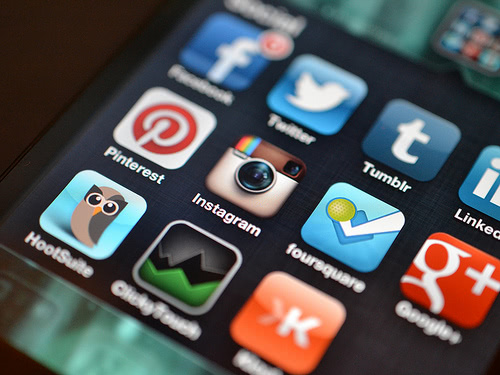
Facebook, TikTok, Instagram, and X: The most checked social medias
Social media platforms like Facebook, TikTok, Instagram, and X (previously known as Twitter) give people a virtual space to express themselves freely. But just because Facebook asks, “What’s on your mind?” or X prompts, “What’s happening?” doesn’t mean we need to share every thought each time we log in. We’ve all felt tempted to vent about a tough day or unfair teacher. Or, we feel that we just have to post that hilarious photograph from the last party on our Instagram story.
Remember, these platforms are creative outlets to showcase your talents and abilities—and you should take advantage of them! It’s a great place for colleges to see how you choose to express yourself. However, before uploading any content, ensure your profile reflects you positively, as it could impact your chances of admission to your desired school.
Cleaning up your social media profile before applying to college
Your online presence is an extension of yourself. Strive for a simple, clean, and professional profile across all platforms. Delete any messages, images, or videos under your name that contain hateful speech, showcase illegal activities, or show insensitive or offensive content. It’s best to refrain from posting this type of material in the first place. Remember, once something is on the internet, it tends to stay there.
If you’ve posted questionable images or content in the past, take time to go through and delete it. This includes any images that showcase you in a negative light, even if your actions weren’t illegal, or messages that could be misinterpreted. Keep in mind that being accepted to college doesn’t mean you are free to start posting whatever content you want. Colleges have and will revoke acceptance offers in these cases.
When cleaning up your social media, you should check:
- Your posts and captions
- Your replies and comments to others
- Images, including profile pictures, uploaded photos, and banners
- Profile information
- Older social media accounts/posts you made when you were younger
- The accounts, lists, or pages you follow
Can I set my profiles to private?
Yes—you absolutely have the right to set your social media profiles to private. Adjusting your privacy settings is an easy way to limit what others see. This isn’t considered a bad thing or secretive—it simply means you prefer to keep your personal life more private.
Balancing freedom with responsibility
Before you hit post, it’s important to remember the potential impact of what you share. Students have lost athletic and academic scholarships because of controversial content they’ve shared online. Navigating social media requires balancing the freedom to express ourselves with the responsibility of considering the consequences. If you wouldn’t say it face-to-face or do it in public, it’s likely not suitable for sharing or bragging about on social media either. Be mindful of what you post. Your future and college finances are too important to throw away.
Still deciding on what school is right for you? Use College Raptor’s FREE College Match tool to explore personalized college matches, acceptance odds, and financial aid for schools around the U.S.!