Key takeaways
- Fall and spring semesters have different start and end dates. Fall is usually August or September through December and spring is January through May.
- Some classes are only available in the spring or fall.
- Fall semester often has more new students.
- Campus activities usually change with the season.
- Planning ahead is important to make the most of your college experience.
When looking at a college calendar, you might notice that colleges have fall and spring semesters. Both are part of your academic year, but they can differ in important ways. Choosing the right semester to start or plan your classes can affect your class schedule, campus experience, and even your graduation timeline.
Knowing the differences can help you set the best academic goals for each semester, balance your workload, and take full advantage of campus life.
Keep reading to learn how fall and spring semesters really differ—and how you can plan your college journey wisely.
1. Different start and end dates
- Fall semester: usually starts in August or early September and ends just before winter break. It often includes Thanksgiving and other holiday breaks.
- Spring semester: generally starts in January and ends in late May, often including spring break.
Every school has its own set academic calendar, so dates can differ. Some colleges use quarters instead of semesters, which have shorter terms and different start dates.
Always check your college’s official academic calendar. You can find move-in days, class start dates, holidays, and registration deadlines. Knowing these dates can help you avoid missing anything important.

2. Different weather patterns
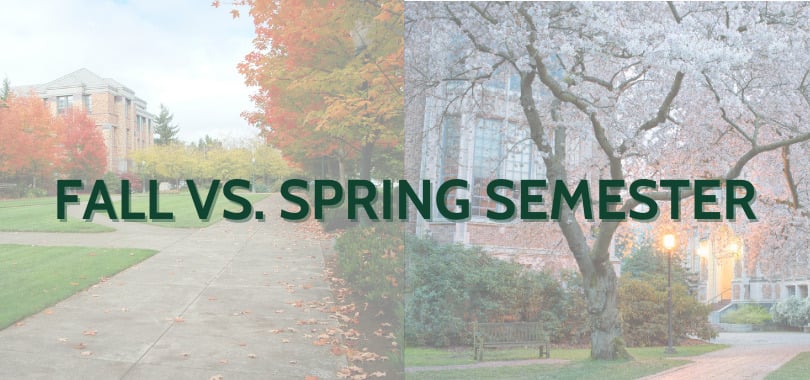
The fall semester brings cooler weather, colorful leaves, and cozy campus vibes. The spring semester usually has warmer temperatures, blooming flowers, and more outdoor activities.
These seasonal differences can affect:
- Campus events and activities (like outdoor fairs or sports)
- Your mood and energy levels
- Planning for jobs, internships, or volunteer opportunities
Seasonal opportunities can also include fall hiking and autumn festivals. Outdoor labs, intramurals, or volunteer events are more popular in the spring. Paying attention to the season can help you plan and make the most of your time on campus.
3. Class offerings are different
Some classes are only offered during specific semesters. For example, many 101-level introductory classes are offered in the fall, while follow-up classes like 102- or 201-level are often available in the spring.
Delaying a required course could push back your graduation date. For example, if a Biology major needs Chemistry 101 in the fall, they may not be able to take Chemistry 102 until the next spring.
Many general education classes are scheduled in the fall, while more specialized or major-specific classes may be available in the spring. Planning your classes carefully can help you stay on track.
Always check your school’s class catalog. Talk to your academic advisor to plan your schedule around classes you need.
4. Fall is when most first-year students usually start
Most first-year students start in the fall semester, but some schools allow spring admissions. Community colleges often let students start in any semester, including winter or summer sessions.
But starting in spring can have some benefits:
- Smaller class sizes
- Less competition for popular classes
- Fewer new students, which can mean a quieter campus
Additionally, graduating seniors in the spring can create a different campus experience than in the fall. They can focus on final projects, career fairs, and graduation events.
Choosing when to start college can affect your social life, class availability, and academic planning.
5. Campus life and activities vary each semester
Fall and spring semesters offer different campus experiences:
- Fall: Homecoming, football games, fall festivals, Halloween events, and preparation for winter holidays
- Spring: Spring break, outdoor sports and festivals, graduation preparations, and career fairs
Fall often has larger social gatherings with incoming freshmen. But spring may offer more leadership roles, internships, and networking opportunities.
Getting involved in campus life is a great way to meet new people and make friends. Plus, you can enjoy new experiences that only happen in certain semesters.
How to prepare for each semester
To make the most of each semester, it’s important to plan ahead and stay organized. These tips can help you manage your classes, campus activities, and workload. Here’s how you stay on track toward graduation:
- Plan your classes early: Know which classes are needed for your major.
- Check registration deadlines: Avoid missing priority registration periods.
- Adjust for seasonal changes: Prepare for different weather and campus events.
- Consider your workload: Some semesters may have busier course schedules than others.
- Meet with your academic advisor: Make sure your plan fits your graduation goals.
Planning ahead ensures you can take the classes you need. Plus, you can enjoy campus activities and stay on track for graduation.
How do spring and fall semesters differ from winter and summer semesters?
Taking winter and summer classes could help you graduate college a bit faster. Here’s how they differ from the spring and fall semesters:
- Offer shorter programs. Spring and fall semesters are usually around 15 weeks, while winter and summer classes can be between 3 to 4 weeks and 12 weeks respectively.
- Only specific classes are available. Winter and summer semesters only offer so many classes to students, and you may not be able to find one that helps you graduate faster
- Some are more rigorous. Since the courses are in shorter time frames, you may be attending more classes throughout the week or have to complete a lot of work in less time
Make the most of every season on campus
Each semester brings its own seasonal vibe and opportunities. Fall offers colorful leaves, cozy campus events, and a lively social scene. Spring brings blooming flowers, warmer weather, and outdoor activities. Knowing the differences between what is offered in each season can help you plan your classes and campus activities.
Use College Raptor’s FREE College Match tool to explore classes, plan your schedule, and make the most of each semester—no matter the season.