
Key takeaways
- Higher education in the U.S. has evolved from small colonial colleges to large, innovative universities.
- The oldest colleges and universities are: Harvard, William & Mary, St. John’s, Yale, the University of Pennsylvania, and Princeton.
- The newest colleges and universities are: the University of Austin, Oak Valley College, Florida Polytechnic University, Minerva University, Georgia Gwinnett College, and the University of California – Merced.
- Old and new institutions shape higher education differently—through tradition, innovation, or both.
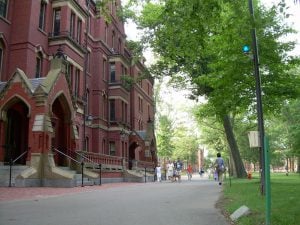
Flickr user Ian Lamont
Higher education in the United States has changed a lot over the last four centuries. The earliest colleges were founded to train ministers, civic leaders, and scholars. Over time, universities expanded. Many schools added research programs. Some started teaching medicine, science, technology, and subjects from around the world. Today, America’s colleges range from centuries-old Ivy League institutions to modern campuses.
The oldest institutions symbolize heritage, tradition, and centuries of scholarship. The newest colleges and universities show how institutions are adapting. They usually bring fresh ideas, modern technology, and new educational models. Together, they show how American higher education continues to change.
What are the oldest colleges and universities in the U.S.?
Take a look at some of the oldest universities and colleges in the United States:

HARVARD UNIVERSITY
- Year Established: 1636
- Location: Cambridge, Massachusetts
- College type: Private not-for-profit, 4-year or above
- Carnegie classification: Doctoral/Research Universities – Extensive
- Highest degree offered: Doctor’s degree
Harvard is the oldest university in the United States. Established in 1636, it began as a small college training Puritan ministers. Over time, it grew into one of the world’s most respected research universities. Harvard now includes professional schools in law, medicine, business, and education. It also has one of the largest academic libraries in the world.
WILLIAM AND MARY
- Year Established: 1693
- Location: Williamsburg, Virginia
- College type: Public, 4-year or above
- Carnegie classification: Doctoral/Research Universities – Intensive
- Highest degree offered: Doctor’s degree
As the second-oldest university in the U.S., William & Mary has a long history of public service. It’s also known for leadership training and academic excellence. This university has a historic campus. It offers strong programs in law, government, and public policy.
ST. JOHN’S COLLEGE (ANNAPOLIS/SANTA FE)
- Year Established: 1696
- Location: Annapolis, Maryland
- College type: Private University
- Carnegie classification: Liberal Arts College
- Highest degree offered: Master’s Degree
One of America’s earliest institutions, St. John’s is known for its ‘Great Books’ reading list. This college values discussion-based learning. It also provides deep engagement with philosophy, literature, math, and science.
YALE UNIVERSITY
- Year Established: 1701
- Location: New Haven, Connecticut
- College type: Private not-for-profit, 4-year or above
- Carnegie classification: Doctoral/Research Universities – Extensive
- Highest degree offered: Doctor’s degree
Founded to train clergy, Yale soon expanded into a major research institution. Today, it is known for a wide range of fields, including drama and global affairs. It also has one of the nation’s oldest law schools.
UNIVERSITY OF PENNSYLVANIA
- Year Established: 1740
- Location: Philadelphia, Pennsylvania
- College type: Private not-for-profit, 4-year or above
- Carnegie classification: Doctoral/Research Universities – Extensive
- Highest degree offered: Doctor’s degree
The University of Pennsylvania was founded to provide a broad education in the arts and sciences. Today, it’s known for its strong programs in business, law, medicine, and social sciences. It has a historic campus and cutting-edge research opportunities.
What are the characteristics of the oldest colleges and universities?
America’s earliest colleges and universities have several things in common:
- Long-term academic reputations built over centuries
- Historic campuses that reflect early American architecture
- Strong research environments, libraries, and professional schools
- Influence in national history, government, and global leadership
These traits have helped them stay relevant and respected for hundreds of years.
The shift to the newest colleges and universities
As society changes, new colleges and universities have emerged to meet modern needs. This shift focuses on STEM fields, workforce development, and cultural preservation. These schools offer modern approaches to teaching and learning.
What are the newest colleges and universities in the U.S.?
Here’s what the five newest colleges and universities in the United States have to offer:
University of Austin
- Year established: 2021
- Location: Austin, Texas
- College type: Private not-for-profit, 4-year
- Carnegie classification: N/A – Candidate for accreditation as of August 2025
- Highest degree offered: Doctoral degree
The University of Austin is a new liberal arts university that welcomed its first undergraduate students in fall 2024. This school promotes free inquiry, open discussions, and bold thinking. It encourages students to excel academically, discover new interests, and build lifelong skills.
Oak Valley College
- Year established: 2016
- Location: Rialto, California
- College type: Private not-for-profit, 4-year
- Carnegie classification: Special Focus Four-Year: Business & Management Schools
- Highest degree offered: Bachelor’s degree
Oak Valley College is a private Christian liberal arts college. It focuses on affordability, character development, and practical business education. This small supportive environment helps prepare students for leadership and service-based careers.
Florida Polytechnic University
- Year established: 2012
- Location: Lakeland, Florida
- College type: Public, 4-year
- Carnegie classification: Special Focus: Arts and Sciences
- Highest degree offered: Master’s degree
This university is centered on technology. It specializes in engineering, computer science, and applied sciences. Known for its modern campus and classes, it gets students ready for high-tech careers.
Minerva University
- Year established: 2012
- Location: San Francisco, California
- College type: Private not-for-profit, 4-year or above
- Carnegie classification: Mixed baccalaureate
- Highest degree offered: Master’s degree
Minerva University offers a modern education built on active learning and real-world experience. Instead of traditional lectures, students engage in small, seminar-style classes online. Then, they live in different cities around the world each year. The curriculum crosses disciplines to build skills in critical thinking, problem-solving, and global awareness. This helps students prepare to lead and adapt in a changing world.
Georgia Gwinnett College
- Year established: 2006
- Location: Lawrenceville, Georgia
- College type: Public, 4-year
- Carnegie classification: Special Focus: Arts and Sciences
- Highest degree offered: Bachelor’s degree
Georgia Gwinnett is the first new four-year public college in Georgia in more than 100 years. It emphasizes hands-on learning, strong student support, and a diverse campus setting.
University of California – Merced
- Year established: 2005
- Location: Merced, California
- College type: Public, 4-year
- Carnegie classification: Doctoral Universities: High Research Activity
- Highest degree offered: Doctoral degree
This university works to protect the environment, do new research, and help more students go to college. It strives to help students who are the first college attendees in their families or come from underserved communities.
Old vs. new colleges and universities: What are the differences?
The oldest and newest colleges and universities in the United States are different in many ways. But both help students learn and grow.
Oldest colleges and universities:
- Have been around for hundreds of years
- Are known for their strong reputations
- Have historic buildings and long-standing traditions
- Focus on subjects like history, literature, and science
Newest colleges and universities:
- Use new technology and modern ways of teaching
- Focus on science, technology, engineering, and math (STEM)
- Prep students for careers that are in demand today
- Offer more flexible learning to reach a variety of students
What they have in common:
Even though they are different, both old and new colleges and universities want students to succeed. They help students build important skills and get ready for their future. Together, they show how colleges in the U.S. mix tradition with new ideas.
Find your dream college—old or new
Both the oldest and the newest colleges in the United States help shape higher education. The oldest schools have a long history and strong traditions. The newest colleges bring fresh ideas and different ways of learning.
Together, they give students many paths to success, from classical liberal arts classes to modern STEM fields.
If you are looking at colleges and want help finding the right one, try College Raptor’s FREE College Match tool. It can show you schools that fit your goals and help make planning for college easier.



Florida Polytechnic University began in 2014! Check us out!
Check out Harrisburg University of Science & Technology – established in 2005!