Key takeaways
- The 2026 digital SAT tests vocabulary in context and a strong SAT vocab list gives you a real edge in the reading section.
- The most tested SAT words appear in passages where you need to figure out meaning from surrounding clues.
- Learning word roots and prefixes may help you decode unfamiliar words on test day.
- Studying 20-30 high-frequency words at a time makes building your SAT vocab list much more manageable.
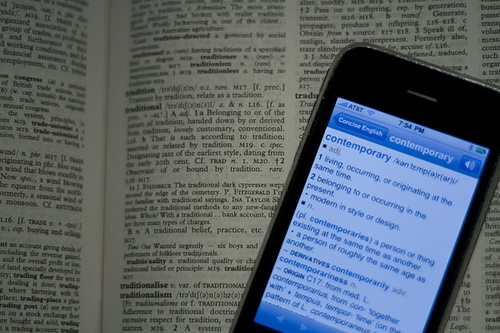
Flickr user Julian Bucknall
If you’re preparing for the SAT, building your SAT vocab list is one of the best places to start. The 2026 digital SAT rarely quizzes you on straight definitions. Instead, it asks how words are used in context, which means the more words you already know, the faster and more confidently you can work through the reading section. Whether you’re just getting started or fine-tuning your prep, this SAT vocab list has you covered.
Digital SAT vocabulary: What’s changed?
The SAT went fully digital in 2024, and the format changed, including how vocabulary is tested. On the old SAT, you might have seen questions that asked for a word’s direct definition. On the 2026 digital SAT, nearly every vocabulary question is context-based. A passage will use a word and ask what it means in that specific situation or ask you to choose the best word to fill in a blank.
This shift makes context even more important. Knowing a word’s primary definition helps, but understanding how tone, subject matter, and surrounding sentences shape meaning is what the digital SAT is really testing. A strong SAT vocab list is still essential, but knowing how words work matters just as much as knowing what they mean.
What are the most common SAT vocabulary words for 2026?
These 25 high-frequency words appear often on the SAT and form the foundation of any solid SAT vocab list:
- Anomalous: Abnormal
- Ambivalent: Mixed feelings
- Bolster: Support
- Capricious: Unpredictable
- Delineate: Describe
- Empirical: Observation-based
- Ephemeral: Short-lived
- Equivocal: Unclear
- Exacerbate: Worsen
- Galvanize: Motivate
- Hamper: Hinder
- Incongruous: Out of place
- Mitigate: Lessen
- Nuanced: Subtle
- Obfuscate: Confuse
- Pragmatic: Practical
- Proliferate: Spread rapidly
- Reconcile: Bring into agreement
- Scrutinize: Examine closely
- Solicit: Seek or request
- Speculative: Based on guesswork
- Substantiate: Confirm with evidence
- Synthesize: Combine
- Tenuous: Weak or thin
- Underscore: Emphasize
How words are used in context: What does the SAT really test?
Knowing a word’s definition is step one. Understanding how it shifts based on context is step two, and that’s where the digital SAT focuses most of its energy.
Here are four high-frequency words with their primary meanings and how they might appear on test day:
| Word | Primary SAT meaning | Example | Tone |
| Ambivalent | Having mixed feelings | She was ambivalent about the new policy, seeing both its promise and its flaws. | Neutral |
| Empirical | Based on observation | The researchers sought empirical evidence before drawing any conclusions. | Academic |
| Synthesize | Combine elements | The essay asked students to synthesize information from multiple sources. | Positive |
| Mitigate | Make less severe | The city introduced new measures to mitigate the effects of the drought. | Positive |
Notice how surrounding words like “promise and its flaws” and “before drawing conclusions” help confirm meaning. Even if you didn’t know ambivalent, context gives you strong clues. Practicing this skill is just as important as memorizing your SAT vocab list.
How many vocabulary words do you need to know for a 1600?
There’s no magic number. Students who score at the top of the SAT Reading and Writing section tend to have a strong working vocabulary, meaning they can confidently understand and use several hundred college-level words.
The good news? You don’t need to memorize the entire dictionary. Focusing on the most commonly tested words, understanding how they appear in context, and building skills for decoding unfamiliar words can take you a long way toward your goal. A well-organized SAT vocab list can make a real difference.
Decoding unfamiliar words: Roots and prefixes
What happens when you hit a word on the SAT you’ve never seen? Don’t panic. Breaking it into parts may help you figure out the meaning even without prior exposure.
Here are some of the most useful Latin and Greek roots to know:
- BENE (Good): benefit, benevolent, benefactor
- MAL (Bad): malevolent, malicious, malfunction
- VINC / VICT (Conquer): invincible, vindicated, conviction
- DICT (Say or tell): dictate, contradict, predict
- PORT (Carry): transport, portable, export
- CHRON (Time): chronological, anachronism, synchronize
- CRED (Believe): credible, incredulous, credential
- RUPT (Break): disrupt, interrupt, rupture
- SCRIB / SCRIPT (Write): describe, manuscript, prescription
- SPECT (Look): inspect, spectator, perspective
Example in action: You see invincible on the SAT and don’t know it. But you recognize VINC (conquer) and in- (not). Put them together: “not conquerable.” That’s the definition without ever having studied that specific word.
How to study your SAT vocab list effectively
Building vocabulary doesn’t have to feel like a chore. Here are a few strategies that may actually work.
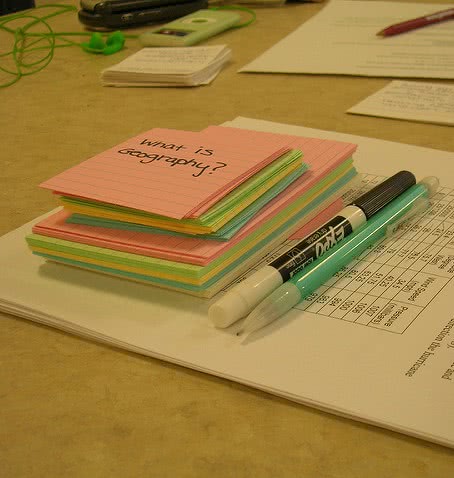
- Flashcards: Make two piles, one of words you know and the other of words that need more work. Review the second pile daily until everything moves to the first.
- Practice tests: Work through free SAT practice tests and highlight any words you don’t recognize. Look them up and add them to your personal SAT vocab list.
- Study roots: Spend 15 minutes learning five new roots per week. Over a few months, this may dramatically expand how many words you can decode on test day.
- Word games: Apps like Wordscapes or a classic game of Scrabble can build vocabulary in a fun way.
Master your SAT vocab list
Once you’ve built your SAT vocab list and feel confident heading into test day, the next step is finding the right school to submit your scores to. Use College Raptor’s College Match tool to discover colleges that fit your academic profile and check out our Scholarship Search tool to help cover the cost.
Frequently asked questions
Does the digital SAT still test vocabulary?
Yes, but not through direct definition questions. The 2026 digital SAT tests vocabulary in context. You’ll read a passage and answer questions about how a word is used in that specific situation.
Are SAT vocab words the same every year?
The specific words may vary, but many high-frequency terms appear across multiple test years. Words like empirical, mitigate, synthesize, and pragmatic tend to show up repeatedly.
What’s the fastest way to learn SAT vocabulary words?
Combining flashcards, root study, and actual reading tends to work well together. Learning roots, such as VINC (conquer) or CHRON (time), may help you decode dozens of words you’ve never seen before, which is especially useful on test day.