Key Takeaways:
- Students earn a master’s degree after completing a graduate program at their university.
- You typically need 2 years to earn a master’s, but the exact timeline depends on the student’s status and major.
- To apply for a graduate program, you’ll need a bachelor’s, strong GPA and standardized test scores, and letters of recommendation.
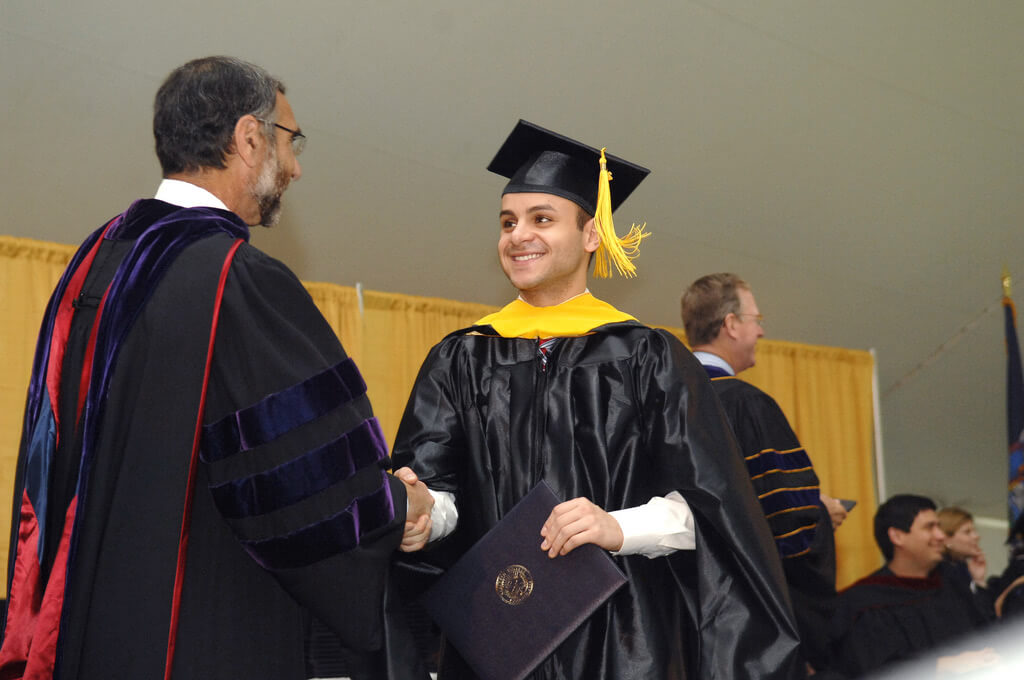
Source: Flickr user nazareth_college.
A master’s is a postgraduate degree that shows a student completed advanced coursework and material based on the student’s chosen area of study. Some students pursue a master’s degree after their bachelor’s to increase their knowledge, gain necessary career skills, and improve their salary. You may also need to earn one if you’re going for a doctorate. Below, we’ve outlined everything you need to know about master’s, how they compare to bachelor’s, how you can earn one, and more.
What Is A Master’s Degree?
A master’s degree is granted by graduate schools, showing the student completed the advanced coursework. Students, also known as graduates, specialize in their chosen subject area, which is often related to their undergraduate major (but not always). The exact benefits and experience depends on the program, but courses cover advanced knowledge and skills, beyond what’s taught in undergraduate programs. These classes prepare students for the workforce, specialized career fields, and doctoral degrees.
Typically, graduates need to complete a thesis at the end of the program to earn their master’s degree. The thesis is a research paper or project that demonstrates the student’s knowledge and skills related to their area of study.
Bachelor’s Degree Vs. Master’s Degree
A bachelor’s degree and a master’s degree are two different academic degree levels. You’re eligible to pursue a master’s degree only after you’ve earned a bachelor’s degree.
Most bachelor’s degree programs take four years to complete while most master’s degree programs are completed within two years.
Bachelor’s degree programs typically cover foundational classes and general education courses related to a specific field. Master’s degree programs dive deeper into a selected discipline, building upon the knowledge gained during a bachelor’s program. These courses require critical thinking, research, analysis, and other skills to succeed.

Types of Master’s Degrees
Master of Science (MSc) and Master of Arts (MA) are two of the most popular types of master’s degrees but they’re several types available. The best one for you depends on your goals and chosen field.
- Master of Arts (MA): A humanities-based degree, it covers several disciplines related to art and humanities, from social sciences to languages and History to Literature.
- Master of Science (MSc): MSc’s are for STEM topics, such as Computer Science, Data Science, Biology, Engineering, Economics, and Mathematics. The programs enhance students’ scientific, professional, or technical proficiency.
- Master of Business Administration (MBA): These degrees prepare students for a career in business. Students can choose to pursue a general business education or a specialty, including Finance, Marketing, Operational Management, Strategy, and Management Consulting.
- Master of Public Health (MPH): For those interested in public health, MPH programs focus on health issues, health science, statistics, research, economics, policy, and more.
- Master of Education (MEd): Some states require instructors to hold an MEd in order to teach. MEd programs often include student teaching opportunities.
- Master of Fine Arts (MFA): MFA programs span everything from specific visual art concentrations to design and theater to film.
Other types of master’s degrees include Master of Research (MRes), Master of Philosophy (MPhil), Master of Library Sciences (MLS), and Master of Social Work (MSW).
How Long Does It Take To Get a Master’s Degree?
You’ll need around two years to earn your master’s degree, though the exact length depends on your status (full time vs. part time), the school, and your area of study. Some colleges offer dual-degree programs that allow you to earn your bachelor’s and master’s at the same time in five years.
All told, you should expect to take 30 to 60 hours of coursework, depending on your concentration.
How Do You Earn a Master’s?
To apply for a master’s program, you’ll first need to have a bachelor’s degree, usually with an undergraduate major related to the master’s program you’re applying to. However, the subject requirement depends on the focus and school. In some cases, you may only have had to take prerequisites.
As with undergraduate schools, graduate programs are looking for standout students – and each program has different requirements. Generally, the better your application, the better your acceptance chances. This means a strong GPA, good entrance exam scores (such as the GRE), and stellar letters of recommendation.
To graduate with your master’s, you have to meet minimum GPA requirements and complete a thesis, internship, or capstone project, depending on your concentration.
Benefits of a Master’s Degree
There are several reasons a student might pursue a master’s degree – and several benefits, including these:
- You gain specialized knowledge. Employers know you have specialized knowledge in your area of study, which increases your credibility and gives you a competitive edge over applicants who only hold a bachelor’s.
- You have higher earning potential. Professionals with master’s often earn higher starting salaries compared to professionals with a bachelor’s.
- It’s easier to move to senior positions. Master’s programs often cover management and leadership skills, which could give you a leg up when it comes to promotions.
- It’s required for some careers. In some job positions, such as teaching in select states or healthcare, you need to have at least a master’s degree to get in the door.
- You have a wider professional network. Expanding your network can lead to unique opportunities, job offers, and exclusive conferences.
- You can pursue your PhD. Some doctoral degree programs require you to have your master’s to apply.
How Much Does a Master’s Degree Cost?
On average, a master’s degree costs $62,820. The total cost depends on the student’s major, school, location, and program length. For example, private graduate schools usually have higher sticker prices than public institutions, but private schools tend to have more financial aid. However, students can save thousands by attending a public in-state university rather than a public out-of-state school thanks to lower rates for residents.
Graduates should apply for financial aid by completing the Free Application for Federal Student Aid (FAFSA). You can also research scholarships and grants designed for graduate students.
Is a Master’s Right For You?
Whether a master’s degree is right for you depends on your education and career goals. For some career paths, earning a graduate degree is a no-brainer – it’s required or can lead to a much higher salary. In other fields, a master’s might only result in a handful of benefits, making it less worth the effort, time, and money.
If you’d like to pursue your graduate degree, our major’s search tool helps you identify the top universities in your field.