Key takeaway
- The SAT went fully digital in the spring of 2024, replacing the paper-and-pencil exam with a computer-based test that now takes 2 hours, 14 minutes.
- While the digital SAT still tests for college readiness and has the same scoring scale, it is also now shorter, more secure, and adapts based on student performance.
- Preparing for the digital SAT requires studying, as well as being familiar with the Bluebook™ app, pacing strategies, and what to expect if technical issues arise.
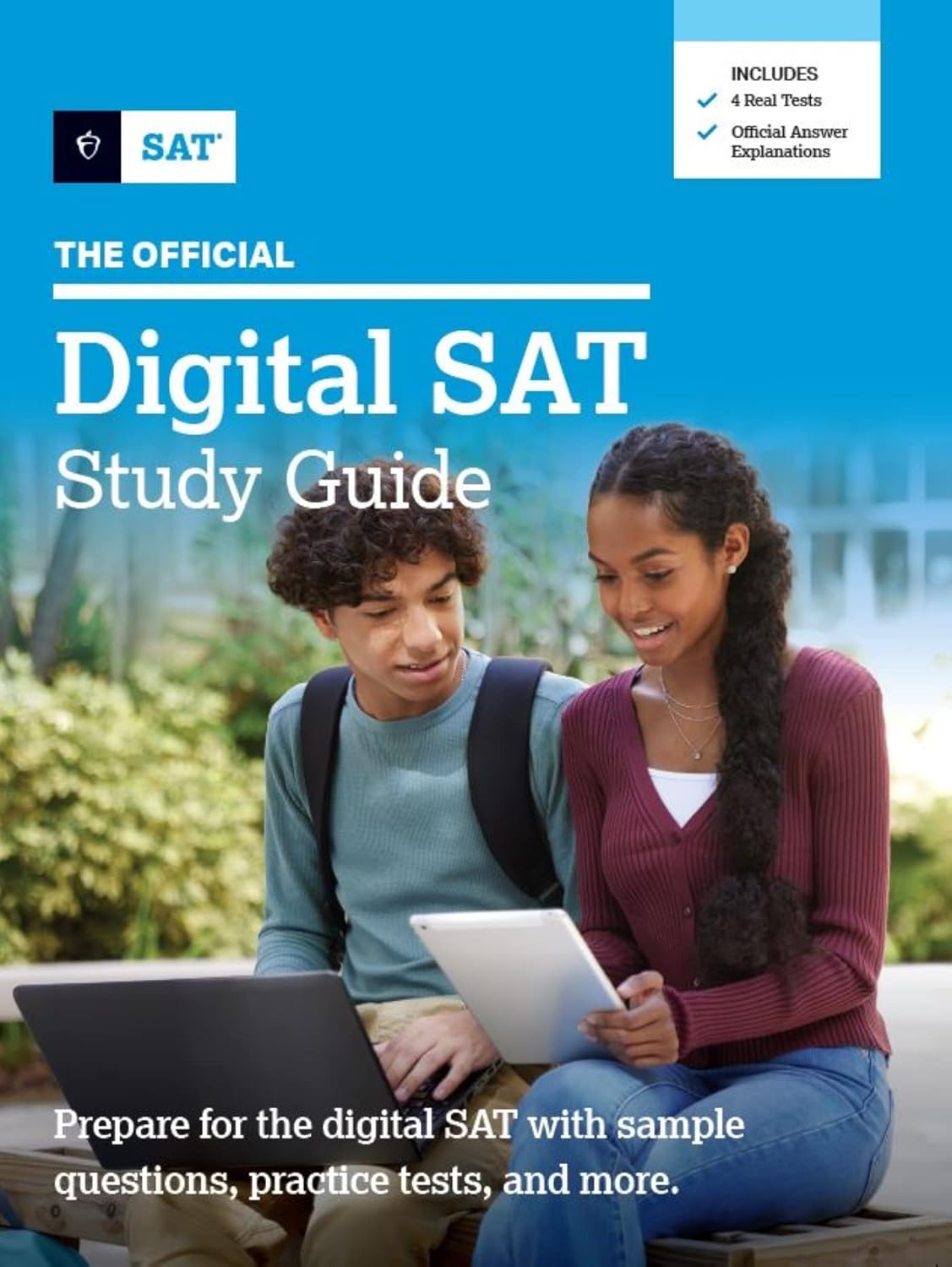 The SAT has officially gone digital! That’s right, the standardized paper-and-pencil test that has been around since 1926 is trading in scantrons for screens. Today’s digital SAT is a computer-based exam that takes just over two hours to complete and has been reimagined to be more efficient and secure than the traditional one.
Although many schools declare themselves as “test-optional,” your SAT scores still matter. Submitting your score can show initiative, that you’re willing to challenge yourself, and even be what helps your application stand out. And if your score doesn’t reflect your best work, you’re not required to send it. Let’s take a look at everything you need to know about the digital SAT and how you can start preparing.
What is the digital SAT?
The first digital SAT started in the US in the spring of 2024. Now, you might be wondering, “Is this just the same paper-and-pencil SAT except in computer format?” While some things stayed the same, there are also new changes to be aware of.
What’s the same?
- It still measures college readiness skills
- The scoring scale remains 1600
- It is still administered in schools
- Students still have access to all the same free study tools
What’s different?
- It is now administered on a technological device through an application called Bluebook™
- The test is an hour shorter
- The reading passages are shorter
- Students can now use their calculator on the entire math section
- The test adapts based on how students perform on the first module (i.e., if they perform well on the first module, the second module will have harder questions)
Why did College Board switch formats?
According to the vice president of College Readiness Assessments at College Board, “The digital SAT will be easier to take, easier to give, and more relevant.” The test is now shorter, more secure, and the scoring is faster. Students now get their tests back in days rather than weeks. Ultimately, as learning evolves in this digital age, College Board aims for the SAT to evolve with it.
What is the structure of the digital SAT?
The SAT has two sections: Reading/Writing and Math, with each section being divided into two modules. The first module includes questions ranging from easy to hard. Depending on how you perform on the first module, your second module will adjust in difficulty. This means you may have more challenging or less difficult questions. The majority of the questions are multiple choice, with some math questions being open-ended.
The Reading and Writing section
For the Reading and Writing section, you can expect to see the following types of questions:
- Craft and structure
- Information and ideas
- Standard English conventions
- Expression of ideas
Note that the passages are now shorter, only ranging from 25 to 150 words.
The Math section
For the Math section, you can expect to see the following types of questions:
- Algebra
- Advanced math
- Problem-solving and data analysis
- Geometry and trigonometry
Note that about 30% of the math questions are real-world word problems.
How long is the digital SAT?
You will have a total of 2 hours, 14 minutes to take the digital SAT with one 10-minute break before the Math section. Here is a breakdown of the length of each section:
| Section | Duration | Questions | Time/question |
| Reading and Writing | 64 minutes (two, 32-minute modules) | 54 | 1.18 minutes |
| Math | 70 minutes (two, 35-minute modules) | 44 | 1.59 minutes |
| TOTAL | 134 minutes | 98 | – |
What to expect on test day
You should plan to arrive on time on the day of the digital SAT. The testing doors open at 7:45 a.m. and close at 8:00 a.m. Testing will begin within the next half hour. You can expect to log on to the Bluebook™ application, where you will be given a test code. Once you enter the test code, the SAT will begin. The app will keep track of your time as you test. Once you have submitted a module, you may return to it.
You’ll also have access to a number of tools that you can use on test day. These include:
- A calculator and reference sheet for math questions. (You can bring your own calculator if you prefer.)
- An annotation and highlight tool for reading and writing questions.
- A zoom feature to adjust text size.
- A mark-out option to eliminate answers on multiple-choice questions.
- The option to flag questions for review later.
Once you’ve completed the SAT, your answers will be submitted automatically, and your proctor will dismiss you.
Preparing for the digital SAT
Because you will be taking the SAT on a device, it is important that you come prepared. Here are some tips to help you feel more confident on test day:
Download the official BLUEBOOK™ APPLICATION
Once you download this app to your computer, you will be able to take free practice tests and get comfortable with the digital tools. If you are using your own device to take the exam, you’ll need to complete the exam setup five days before your test date.
Learning pacing strategies
On average, you’ll have a little over one minute per question. Leading up to test day, practice pacing yourself with the free practice tests so you avoid spending too much time on one question. If you get stuck, flag it and come back to it with any time you have left.
Understand how the adaptive testing works
The digital SAT is adaptive, meaning the second module’s difficulty is based on how you did in the first module. It’s important to know that you are not at a disadvantage if you receive easier questions in your second module. Your score will still be accurate and reflect your knowledge and skills.
Know when to guess and move on
Remember, there is no penalty for guessing. If you find yourself incredibly stumped on one question, even after returning to it, make your best educated guess and move on.
Be prepared for technical issues
Rest assured, if your device freezes, crashes, or loses Wi-Fi, the Bluebook™ app automatically saves your answers. If a technical issue arises, bring it to your proctor’s attention, and they will help you so you can continue your test.
The SAT: Rebuilt for the digital age
The digital SAT still has the same core purpose it has always had: to test college readiness. However, this format is shorter, more secure, and designed to better reflect how students learn today. While many schools no longer require SAT scores, submitting one can still strengthen your application. Once you understand how the test is structured and what to expect, you can feel more confident and prepared to perform your best.
Your SAT score can help you stand out in the admissions process. Curious how your scores measure up? College Raptor’s FREE College Match tool lets you explore SAT score ranges at schools you’re interested in.