Key takeaways
- Microcredentials are short learning programs that give you fast access to specific skills without a long-term commitment.
- From graphic design and coding to healthcare and cybersecurity, microcredentials can help you train for a specific and valuable skill.
- When chosen strategically, microcredentials can help you stand out in the job market.
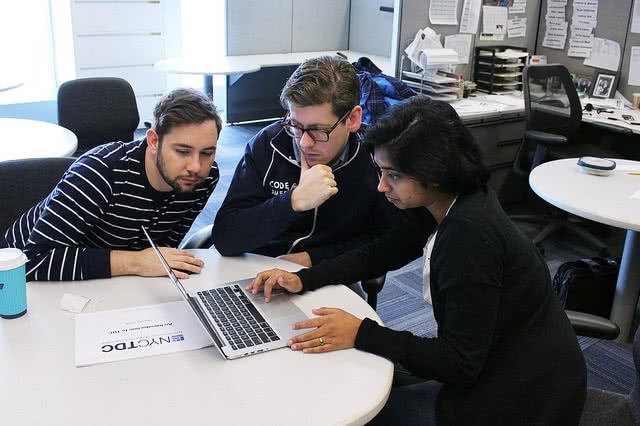
Flickr user Code for America
Have you ever thought you’d be good at something, but didn’t want to commit to going back to school for it? Well, you might not have to. Microcredentials offer a flexible way to build specific skills without enrolling in a full degree program.
So, what exactly are microcredentials? They are short courses from accredited universities that help you gain proficiency in a particular subject or skill. Once completed, you earn a credential to show future employers. Now the bigger question becomes: Do you need a microcredential, and why do they matter? Let’s break it down.
What are microcredentials?
When most people think of college, they think of spending four years earning a degree, taking a required number of credit hours each semester, and sometimes sitting through classes they don’t necessarily need but must complete to graduate.
But what if you only want to learn one specific skill, do it in a short amount of time, and earn something that proves you did it? That’s exactly what microcredentials are for. A microcredential is a short, focused program that teaches you a specific job skill. Once completed, you earn a badge that you can add to your resume or LinkedIn profile.
Microcredentials are typically:
- Faster than a traditional degree
- More affordable
- Focused on real job skills
However, microcredentials are not intended to replace college. Instead, they focus on boosting specific skills so that you stand out more in the job market. This is important because more and more employers are starting to shift towards hiring employees based on what they can do, rather than where they went to school.

Types of microcredentials you can earn
Here are the most common types of microcredentials you can earn:
- Digital badges: Digital badges are the most basic type of microcredential you can earn. These are very short courses that show you have mastered a single skill and are awarded in the form of a visible marker that can be displayed on social media, resumes, or LinkedIn profiles.
- Professional certificates: Professional certificates are awarded after you have completed a series of courses covering a specific skill or subject. These typically require more of a time commitment than a badge.
- Nanodegrees: Nanodegrees focus on the technological and digital skills that are relevant to the current job market.
Who should pursue microcredentials?
Thinking about earning a microcredential? You may benefit if you are interested in one of these areas:
- Technology: Coding, IT support, software, app development, computer repair
- Healthcare: Medical support roles, medical billing, telehealth support, insurance coding
- Business and marketing: Social media, digital marketing, sales, business analytics, sales skills
- Education: Teaching tools, classroom technology, learning support, instructional design
- Data and cybersecurity: Data analysis, information security, tech protection, database management, cybersecurity defense
- Freelancing: Graphic design, copywriting, social media, logo design, podcast editing
- Entrepreneurship: Building your own business, business growth strategies, marketing your business
- Professional development: Anyone who wants to grow their skills in leadership, public speaking, workplace communication, career readiness
Why microcredentials are worth considering
Whether you’re looking to pick up a new skill quickly or sharpen what you already know, there are many benefits to earning a microcredential:
- You learn exactly what you need. Maybe you want to excel at graphic design or coding. Microcredentials allow you to focus on that one skill in a quicker time frame.
- You’ll finish quickly. Earning microcredentials can be completed in a matter of weeks or months, rather than years.
- You’ll spend less money. Try something new without the large financial risk of a traditional degree.
- You may stand out to employers. Extra skills mean you may gain a competitive edge over other applicants when applying to jobs.
- Your confidence may increase during interviews. Microcredentials allow you to practice skills instead of simply learning about them. This can boost your confidence when interviewing.
How earning a microcredential works
To earn a microcredential, you’ll first need to enroll in a program at an accredited university. To ensure you choose the right program, make sure you conduct research to find programs that align with your career path. 89.9% of universities offer at least one microcredential, so chances are your school might already have options for you.
Once enrolled, you will need to demonstrate mastery of the skill or subject through hands-on projects or exams. While some microcredentials may only take a few hours to learn, others may take several weeks or months. Before committing, you should make sure you have the time—especially if you are currently earning a four-year degree.
Comparing microcredentials vs. traditional degrees
Both microcredentials and traditional degrees have numerous benefits, but they do serve different purposes depending on what your career goals are. Here are some of their main differences:
Time
While microcredentials may only take several weeks or months to earn, traditional degrees require a minimum of four years.
Cost
For a public, 4-year school, students were paying an annual average of $9,750 (in-state) and $28,297 (out-of-state) in 2022-2023. Microcredentials range in price.
For instance, microcredential courses cost about $1,500 at Pennsylvania State. Meanwhile, they cost between $2,268 and $6,000 at SUNY Broome. Although they may vary in price, microcredentials still offer students an opportunity to build skills at a much lower cost than a traditional degree.
Focus
Degrees can cover a multitude of subjects that students may not need for their career. Microcredentials allow students to focus on one specific skill or subject.
How to showcase microcredentials professionally
Once you earn a microcredential, you may wonder, “How do I let employers know?” First and foremost, add them to your resume and LinkedIn profile.
For your resume, you may add your microcredential badges or certifications under three places:
- Education (e.g., Microcredential in Digital Marketing)
- Skills (e.g., Adobe Photoshop (Microcredential))
- Certifications (e.g., Google Data Analytics Certificate).
For LinkedIn, you will want to add it to your License and Certifications section. And of course, don’t forget to mention them during interviews.
Potential limitations of microcredentials
Even though more employers are recognizing microcredentials, there are still some drawbacks to keep in mind:
- Certain employers still prioritize hiring those with traditional degrees, even if you have excellent microcredentials.
- Not all microcredential programs are created equally. Some universities may have higher quality programs than others.
- If you earn random microcredentials without a strategy in place, you may end up spending money on skills that might not help you with your career goals.
Are microcredentials for you?
If you can think of a few skills you’d like to grow in, then earning a microcredential might be for you. They give you the flexibility to keep learning the skills you need to grow, stand out, and stay competitive in the current job market. College will always matter, but microcredentials help you gain the specific skills you need to stay ready.
Explore thousands of careers to see what might be a fit for you, and that path you’ll need to take to excel.
Road Trip Nation and microcredentials
Want to earn microcredentials your way? Whether it’s information technology (IT), government, cybersecurity, construction, education, or finance, Road Trip Nation lets you explore career paths, average salaries, predicted job growth, daily work activities, resume checklist items, and hear real-life stories from those who have been exactly where you are.